When you buy through our links, we may earn a commission. See our Affiliate Policy.
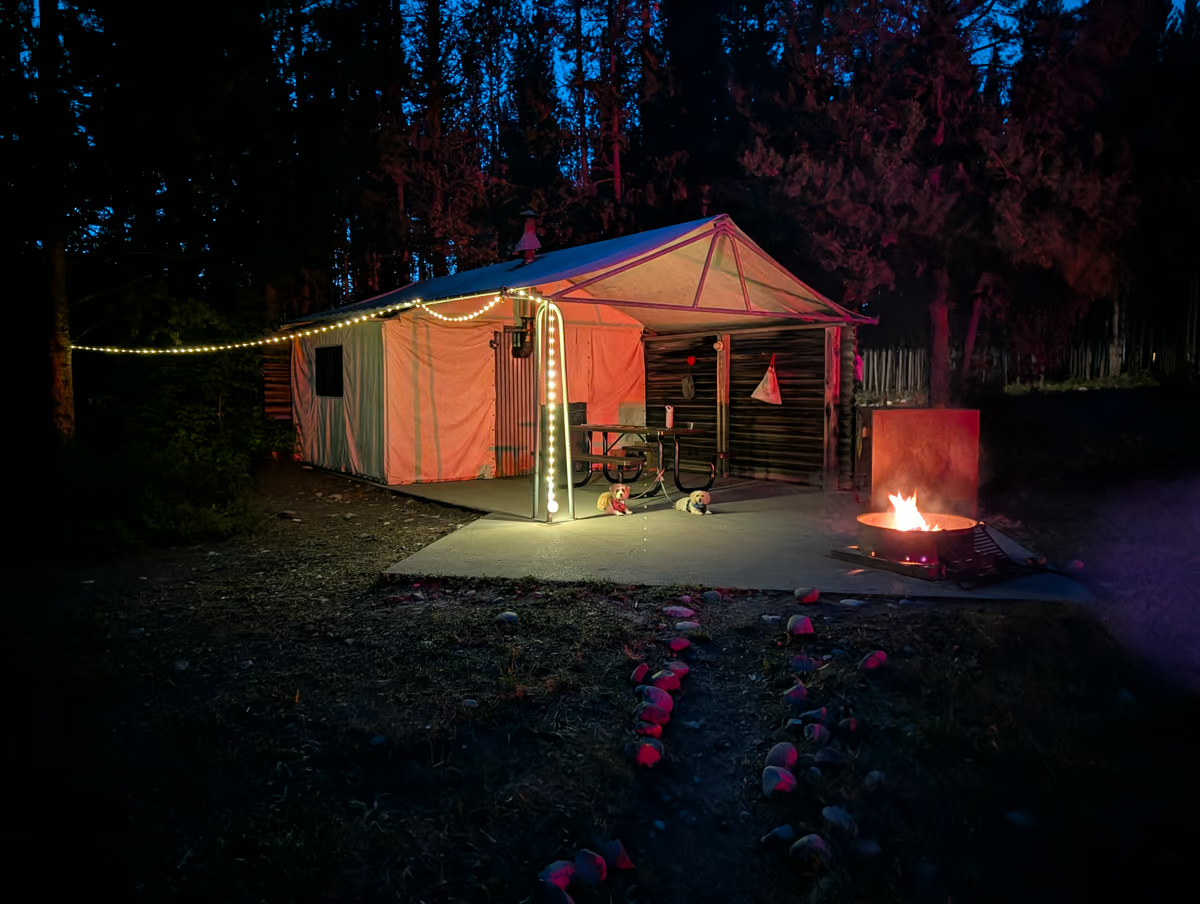
My favorite experience at Grand Teton National Park wasn’t seeing the beautiful mountains, enjoying the morning sunrise, stopping at Mormon Row or seeing moose. My favorite part was spending five nights camping in the Colter Bay tent cabins with our two dogs, Toby and Lily.
We cooked our meals over a fire, heard elk calling to one another somewhere in the distance, watched deer walk through the campground (and heard that a bear did the same) and got woken up by near freezing temperatures.
We went through far more firewood than we expected, underestimated how cold the nights would get and learned that visiting Grand Teton with dogs can be pretty limiting. But, if we were asked if we’d like to camp at Colter Bay again, we’d have our bags packed before we even said the word “yes”.
If you’re thinking about staying in the Colter Bay tent cabins with your own dogs, here’s what our five-night stay was like.
Driving to Grand Teton National Park From Alabama
We drove to Grand Teton National Park from Alabama, with an overnight stop in Tulsa, Oklahoma, before spending two days exploring Colorado Springs. We visited Colorado Springs without our dogs back in 2022 for our honeymoon but, since we were traveling with both Toby and Lily this year, we wanted to fit in as many dog-friendly stops as possible.
We spent one day at Garden of the Gods before visiting Seven Falls and Helen Hunt Falls the following day. The next day we continued our drive north toward Wyoming and the destination of this year’s road trip: Grand Teton.
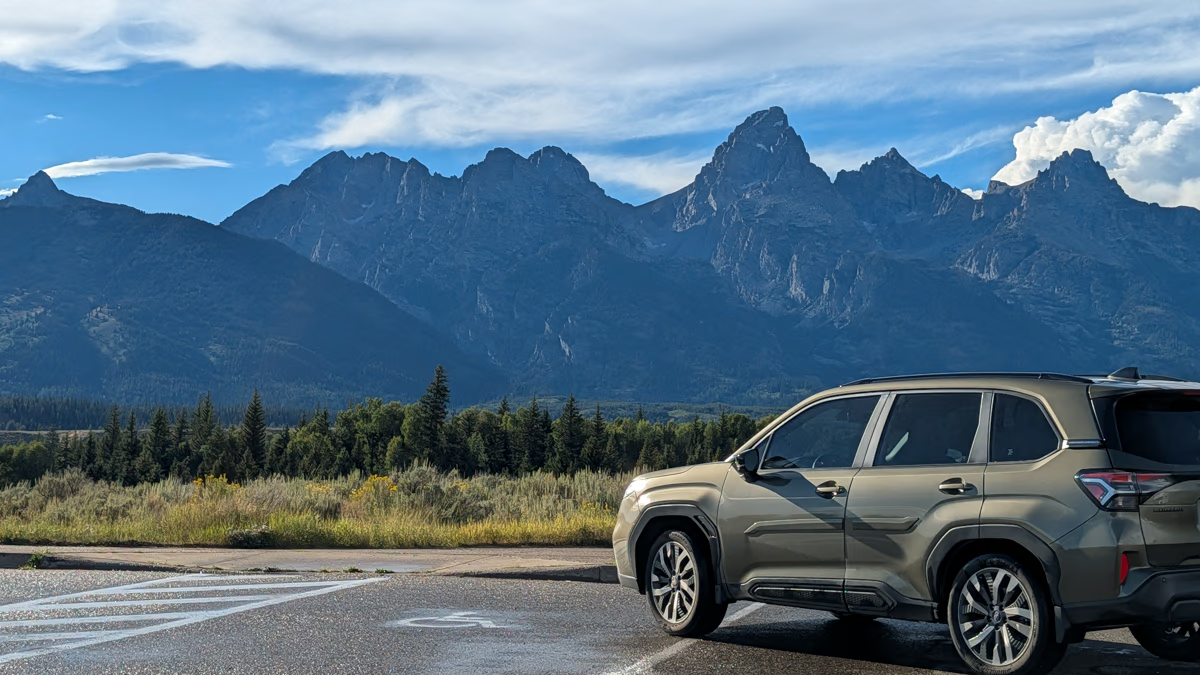
We had two main driving routes to choose from. We could take a 9 hour drive along US-287, or the 10 hour drive along US-191. Route planning using Google Maps made us think that the longer drive would be more scenic because it would take us farther west through the mountains of Colorado and Wyoming. We wanted a more scenic drive, so we chose the route via US-191.
It turned out that the shorter route was actually more beautiful and we took US-287 on our drive from Grand Teton to Rocky Mountain National Park on our return trip home. The one hour difference during an already long 27 hour road trip didn’t make much of a difference to us during our drive there. And, since we took both routes, we figure we got the best of both worlds.
One highlight of the 10-hour drive was stopping for lunch and gas in Rock Springs, Wyoming. We picked up handmade tamales (10 tamales for $20 at the time) and Mexican bread from Carniceria El Primo. We ate a couple of tamales on the road and saved the rest for our first night at Colter Bay, where we warmed them over the fire. They were delicious, and after a long day of driving, having a meal ready to heat up instead of cooking was very welcome.
Buying Groceries and Supplies in Jackson Hole
Before reaching Grand Teton National Park, we drove north through Jackson Hole. I knew the area was popular for skiing and other outdoor activities, but I hadn’t spent much time researching what the town itself would be like.
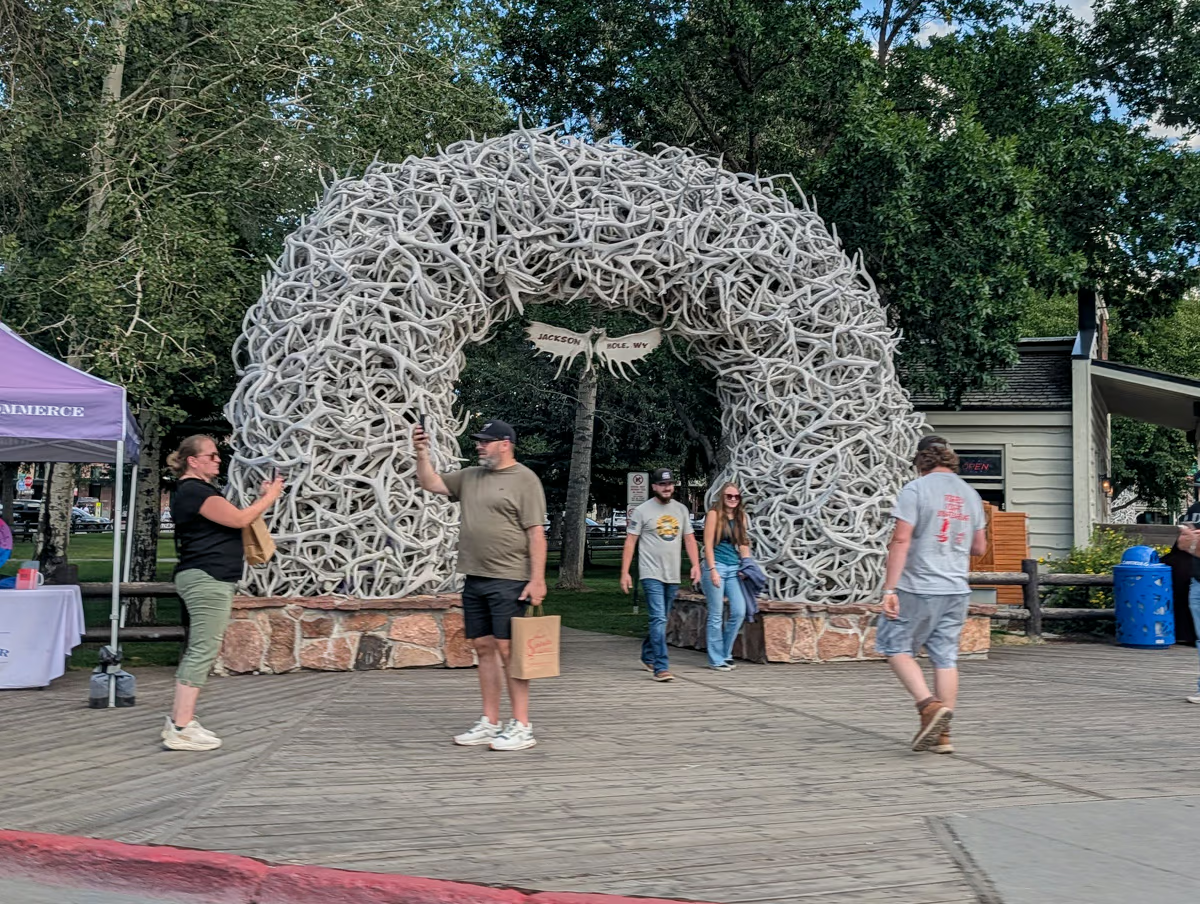
Driving through, it reminded me of Gatlinburg just outside of Great Smoky Mountains National Park. It was very busy, with lots of pedestrians crossing the streets, chain restaurants, shops and a really interesting-looking elk antler arch (made of real antlers) in the town square.
Since we planned to cook at our campsite and wouldn’t have a refrigerator, we needed to pick up a cooler. We’d brought most of our cooking equipment from home, including a stainless steel pan, a titanium pot for boiling water and making coffee, a spatula, cleaning supplies, and plastic drinking glasses and plates. We just didn’t have a cooler compact enough to travel with.
We wanted something inexpensive and collapsible that could keep perishable food cold without taking up too much space in the car. We stopped at a Home Depot before reaching Jackson Hole, but the only coolers we found were the larger, rigid Igloo models. Since we were getting close to the campground, we went to Target instead, where we found one that fit our needs and picked up groceries for the next couple of days.
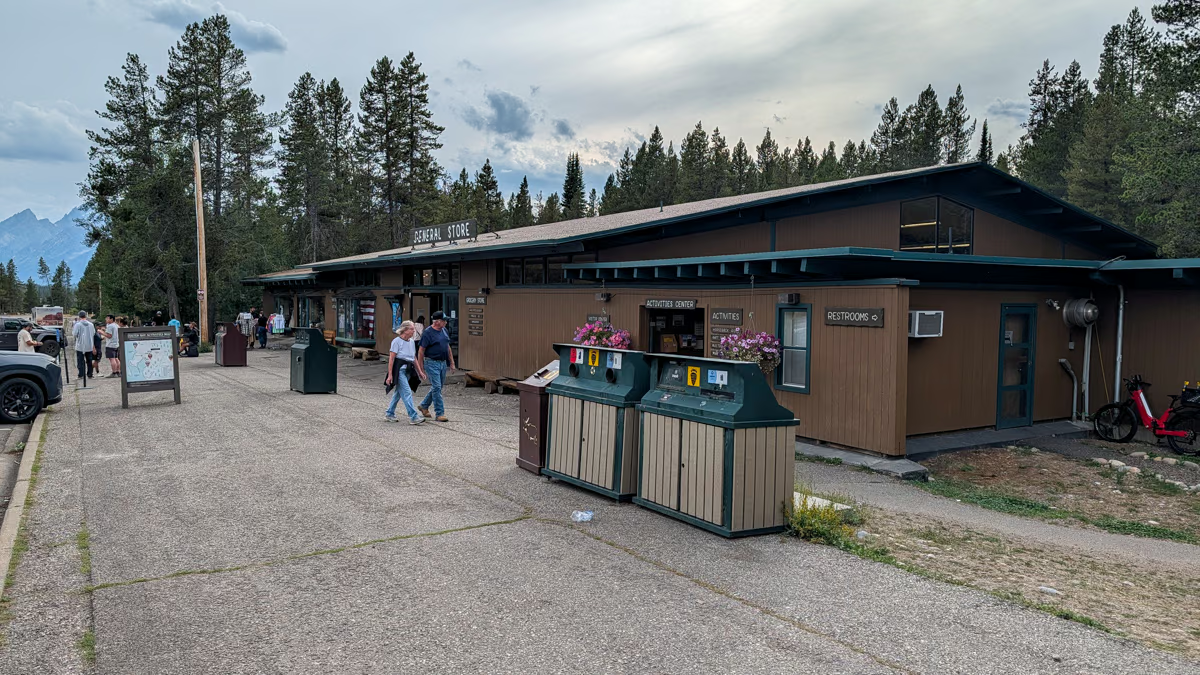
The Colter Bay Grocery Store, right in Colter Bay Village, also sells groceries, including meat, dairy products and vegetables, along with general supplies. It’s convenient to have a store right in the campground, but prices were noticeably higher than what we found at Target. We did end up buying some things there during our stay, but it made more sense to get most of our groceries before entering the park.
Firewood was another expense we hadn’t really thought about. We initially bought bundles in Colter Bay Village for $12, and we burned through it much faster than expected. The wood was pine, which burns quickly, and we needed fires both to cook our meals and to warm the tent at night when temperatures dropped into the 40s.
Colter Bay Village WeatherBetween cooking and heating, we ended up using a lot more firewood than we’d planned. I could almost feel my wallet hurting after buying more and more firewood from the in park store.
On a later trip into Jackson, we found bundles at Smith’s grocery store for less than $5 each and picked up eight. That’s a pretty big difference when you’re buying enough wood to keep a fire going over several nights. During our 5 night stay, we used up each and every bundle (plus some more).
If you’re driving through Jackson Hole anyway, I’d recommend checking grocery stores for firewood and picking up as many of your supplies as you can before heading to Colter Bay. The campground store is convenient when you need something, but we saved a lot of money by shopping in town, especially when it came to firewood.
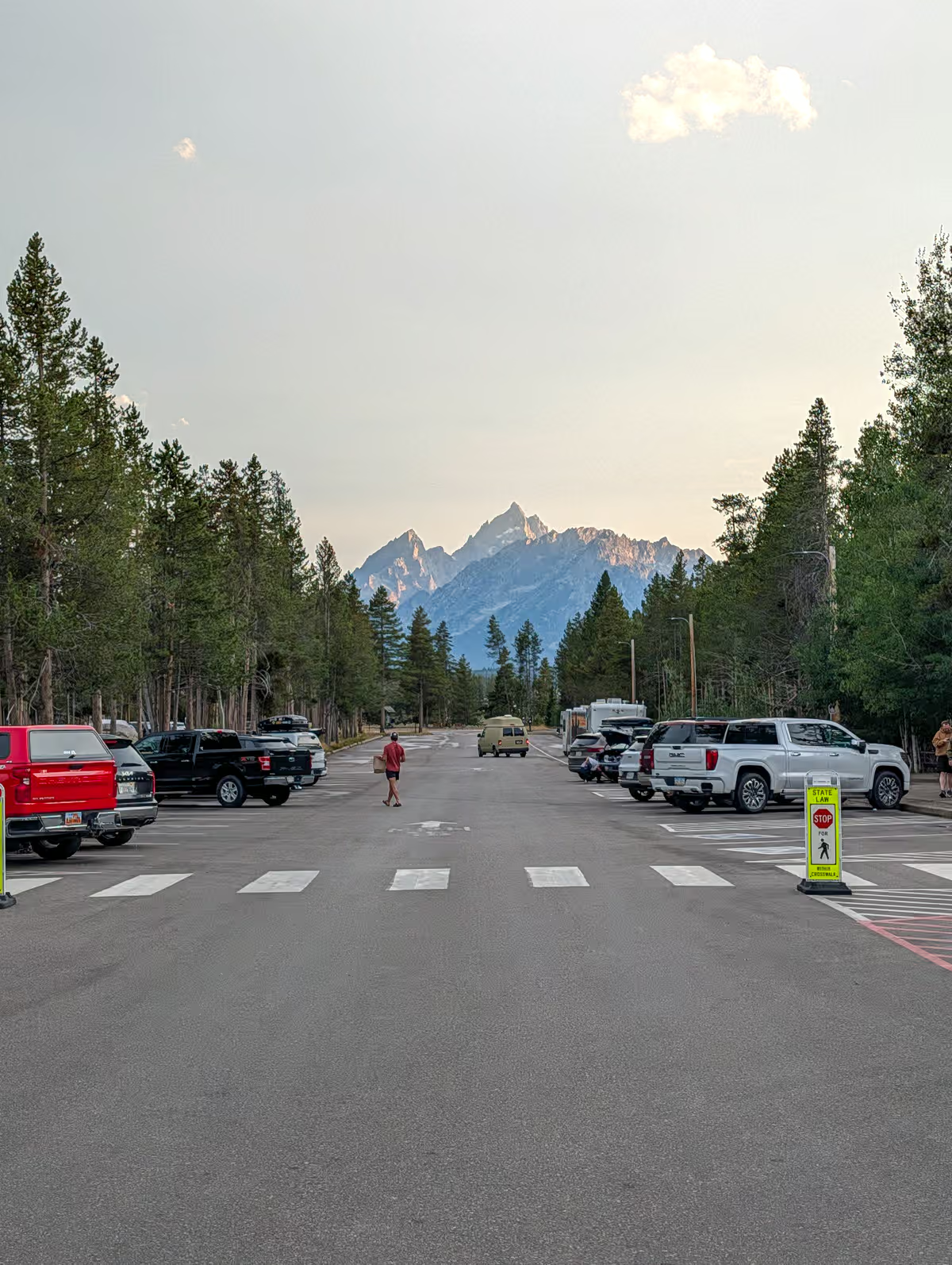
Arriving at Colter Bay Village
We made it to Colter Bay Village around 5pm after a full day of driving, and we were excited to check out our tent. We’ve been getting more into camping over the years. My parents took me tent camping and pop-up camping when I was a kid, but Minerva didn’t grow up camping.
We’ve gradually been moving away from glamping experience, like our stay at Mossquatch Resort on the Olympic Peninsula, and toward more traditional camping.
Minerva had reserved our tent cabin a couple of months in advance, and we paid around $500 for five nights from August 20th to the 25th.
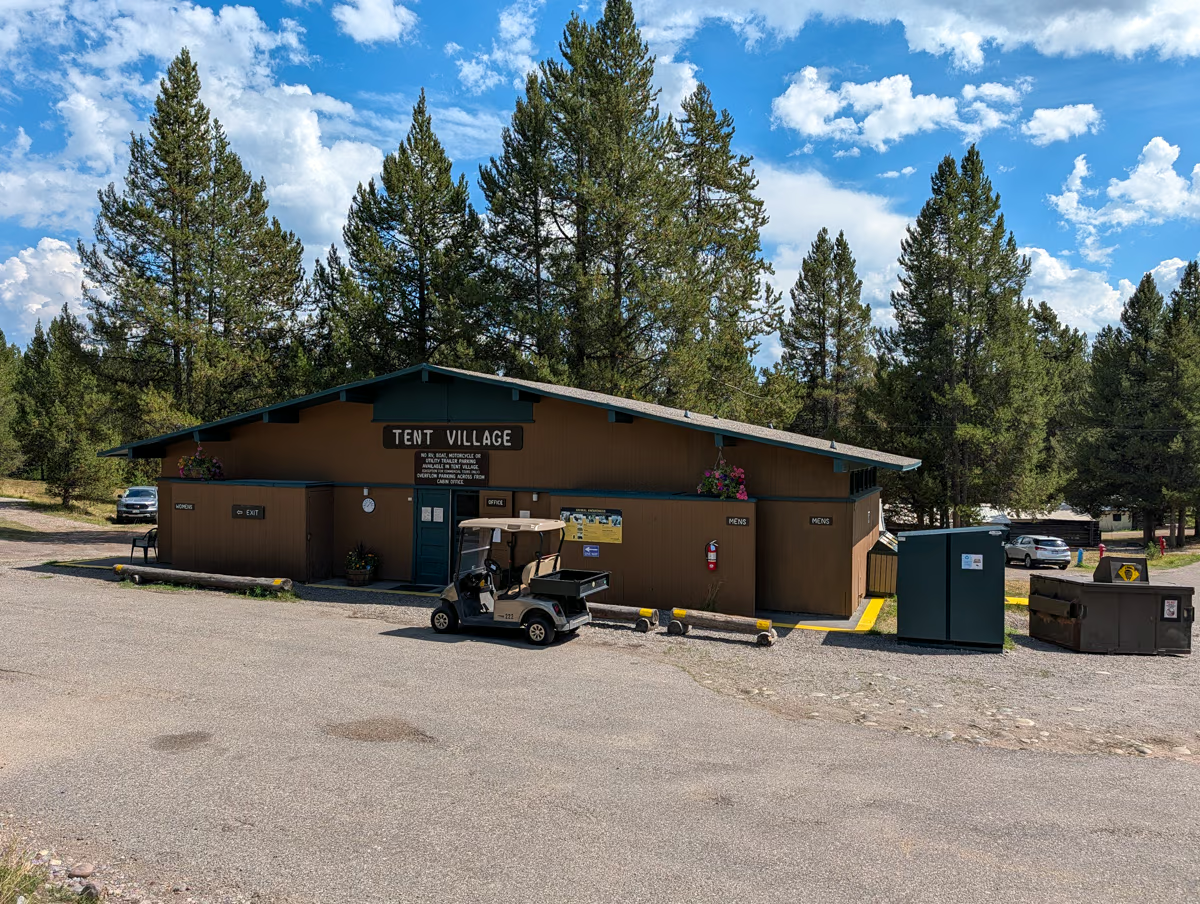
When we first entered Colter Bay Village, we weren’t sure where to check in. We drove past the store, showers and laundry facilities before stopping at the main visitor area to ask for directions. As it turned out, we weren’t far off; we just needed to take Cabin Road to the Colter Bay Tent Village.
After driving a little farther, we parked, and Minerva went inside to get our tent assignment while I waited in the car with Toby and Lily. She also picked up our first bundle of firewood before we drove over to our campsite.
Once we arrived at our assigned tent, we unloaded the car and started turning the tent into our home for the next five nights.
What Are the Colter Bay Tent Cabins Like?
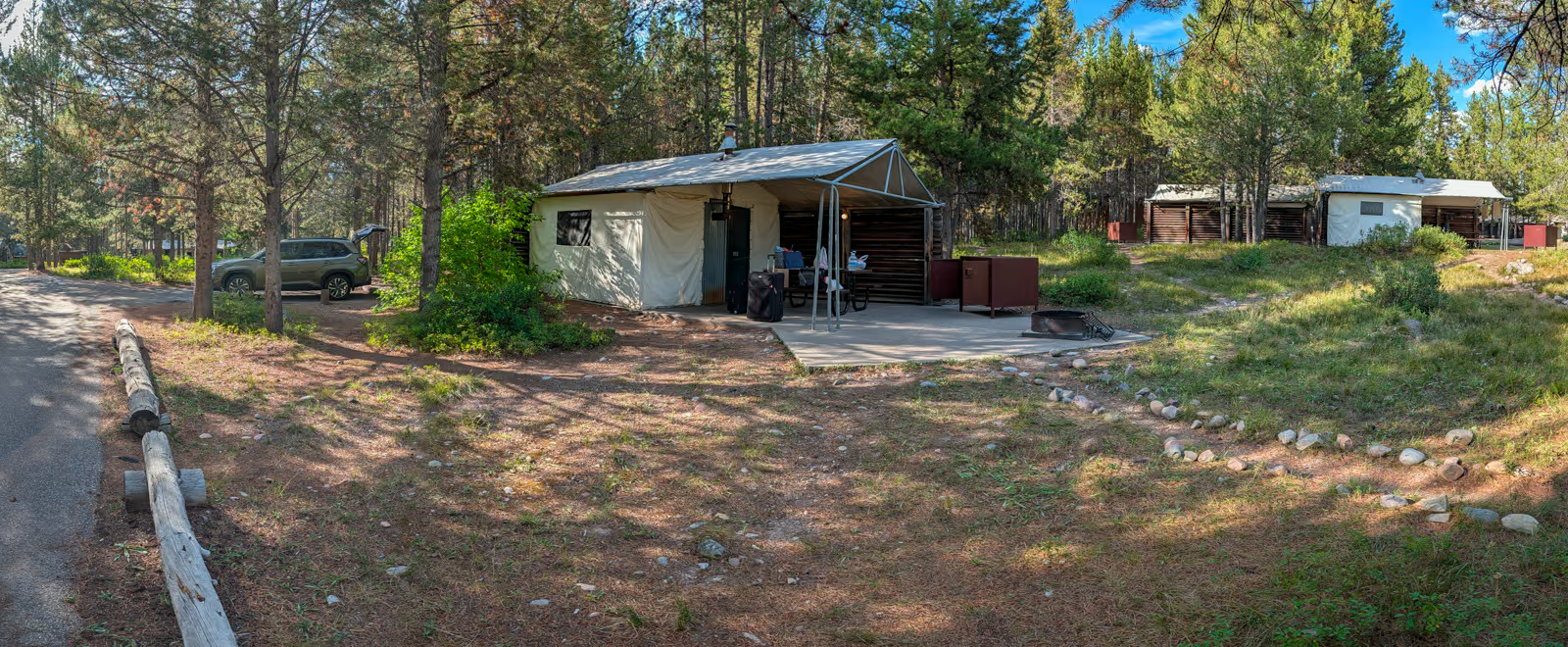
The Colter Bay tent cabins are a mix between traditional tent camping and staying in a cabin. They have a solid roof, two sturdy log walls and two canvas walls.
Each campsite has two tent cabins positioned together at an angle, with the two log walls meeting at the corner. Each tent sits on a concrete slab and has its own outdoor fire pit. There are also two parking spaces for each campsite, one for each tent.
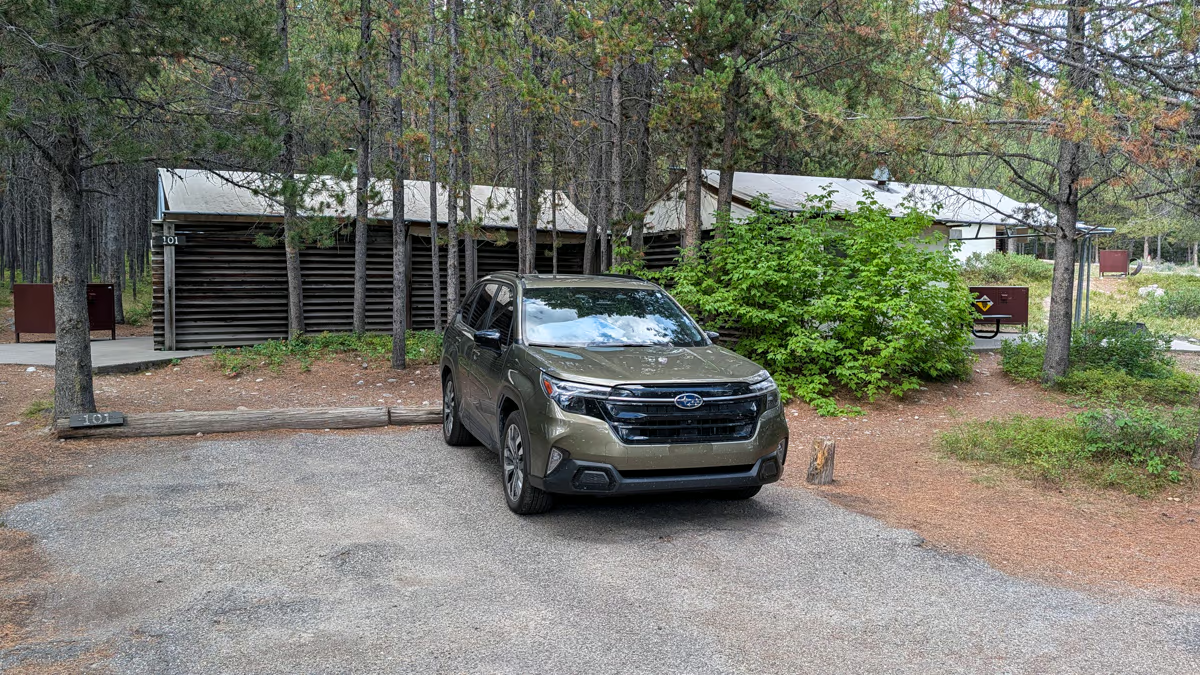
People were coming and going at all hours. Some arrived late at night, while others packed up and left before the sun rose. Despite that, we never had any problems with noise from our neighbors. Everyone was respectful and kept things quiet, including the people camping with dogs. We never had any issues with barking or other noise from the neighboring tents.
The Beds and Sleeping Arrangements
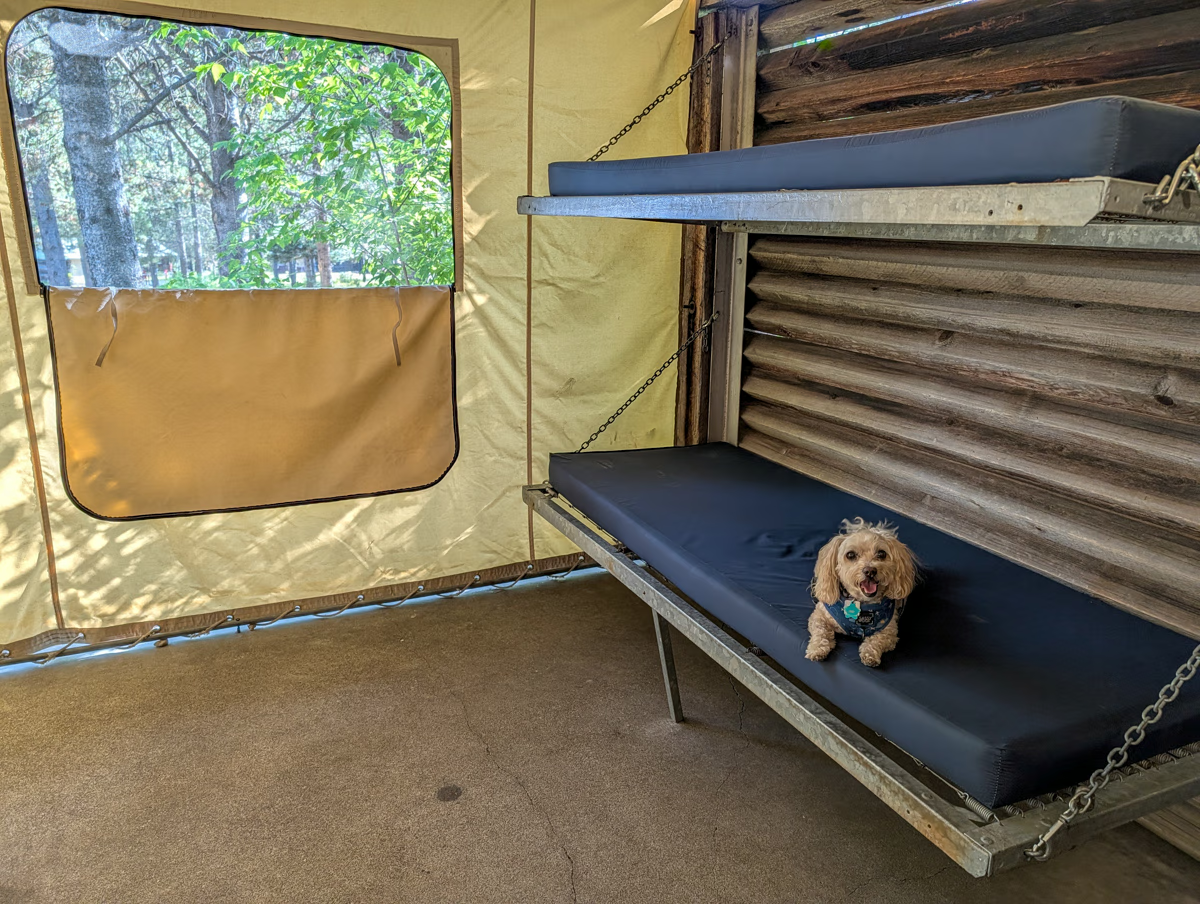
Inside our tent were four beds, two along each log wall, and arranged like bunk beds. The frames were attached to metal rails along the walls and secured with chains. We found that the beds can be folded up against the wall, as long as you secure them properly so they don’t fall back down.
Each bed had a mattress that looked thick but flattened easily and wasn’t particularly comfortable. Underneath the mattresses, the beds had interwoven metal supports attached to the frames with springs. On a couple of the beds, these supports were bent enough that the mattresses sloped slightly to one side.
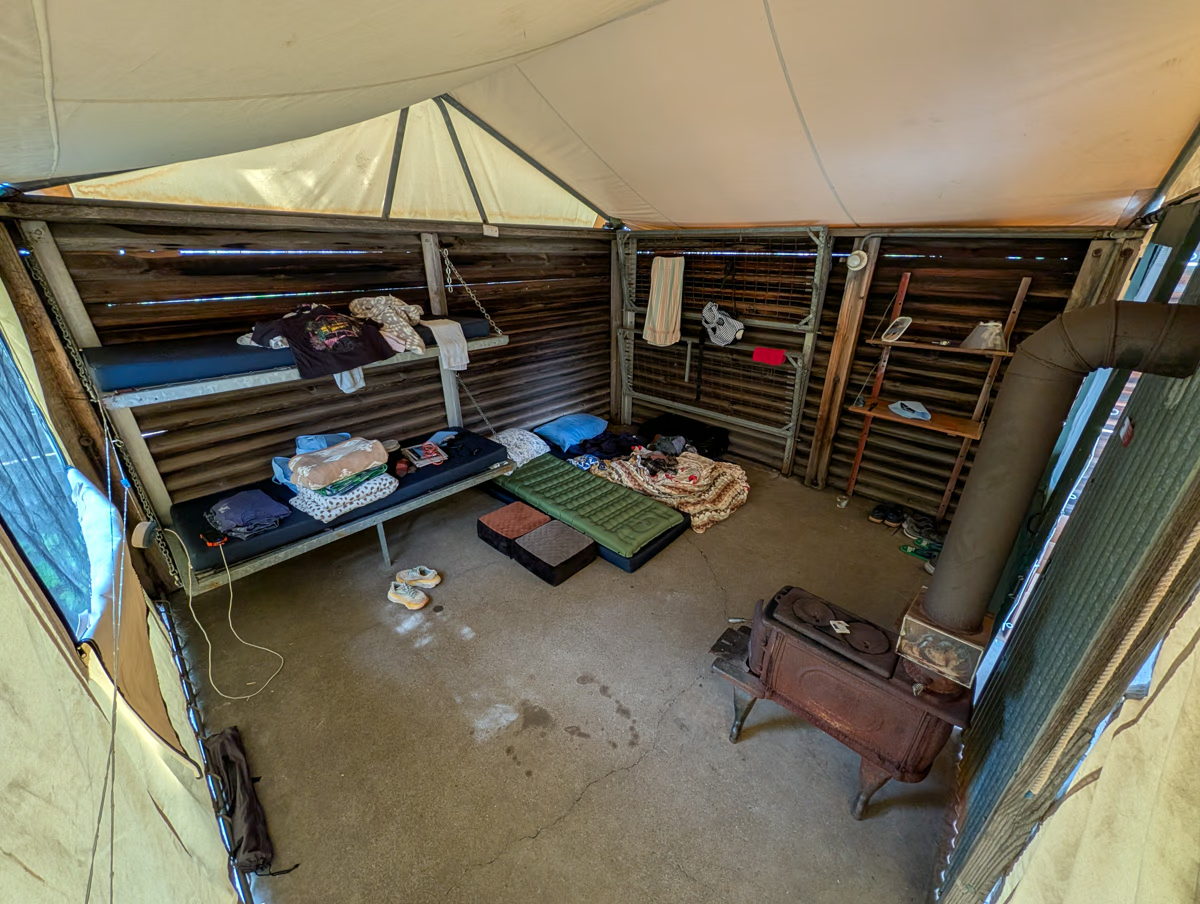
Since we travel with our dogs, we weren’t sure we’d use the bunk beds anyway. Toby is our 14-year-old little man, and we didn’t want him jumping down onto the concrete floor and potentially hurting his legs or back. Both dogs also love sleeping close to us, so we moved the mattresses from two beds onto the floor and secured the empty bed frames against the log walls.
We also brought inflatable sleeping pads that inflate to about two to three inches thick. We put them on top of the mattresses to give us some extra padding. This gave Toby and Lily a place to cuddle with us during the cold nights without us worrying about them jumping up to or off a bunk.
Our setup worked well, but it did mean losing some indoor floor space. That wasn’t a problem for us, though, and we still had plenty of room for the five nights we were there.
The Indoor Wood-Burning Stove and Lights
All five nights that we spent in the tent got cold, with temperatures dropping into the 40s (around 7°C). One of the most important features of the Colter Bay tent cabins, at least for us, was the indoor wood-burning stove. It sits along the canvas wall near the entrance and can be used to heat the tent, warm water or cook.
The stove came with instructions, and we eventually figured out how to use it without smoking out the tent after some trial and error. That first night, though, we woke up around 3am absolutely freezing and Minerva figured out how to get the stove going without making too much noise.
Our smoke detector did go off, though, so sorry to our neighbors! We packed a couple blankets but we didn’t fully understand just how cold the tents could get at night or how much we’d rely on the stove to keep us warm.
You can rent blankets from the Tent Village, and they gave us a number to call if we needed extra blankets after hours. If it got too cold during the night, someone would meet us at the store so we could pick one up. We would much rather buy than rent, though, so the next day we stopped at TJ Maxx in Jackson Hole and purchased additional blankets to help keep us warm.
When you are done using the stove, do not pour water into the cast iron stove. This can cause it to crack.
There’s also a light switch inside the tent that turns on an interior light and an outdoor light near the patio. There are no electrical outlets, though, so any electronics will need to be charged using a portable charger or while driving through the park.
The Outdoor Cooking Area
Outside, each tent has a covered area with a picnic table beneath an awning. It gave us shade while we ate and a place for us to organize our gear before exploring the park for the day. The awning would also offer some protection from rain, but we didn’t have to worry about that during our stay.
Each tent also has an outdoor fire pit on the concrete slab. It’s made of a metal ring with a cooking grate that sits over the top which we used to cook meals and warm up food. The grate can also fold out of the way when you aren’t using it.
On our first evening, we heated the tamales we’d picked up in Rock Springs. Over the next couple of days, we cooked breakfast over the fire, including toast, eggs, bacon and oatmeal, along with dinners like corn, potatoes, brats and chorizo.
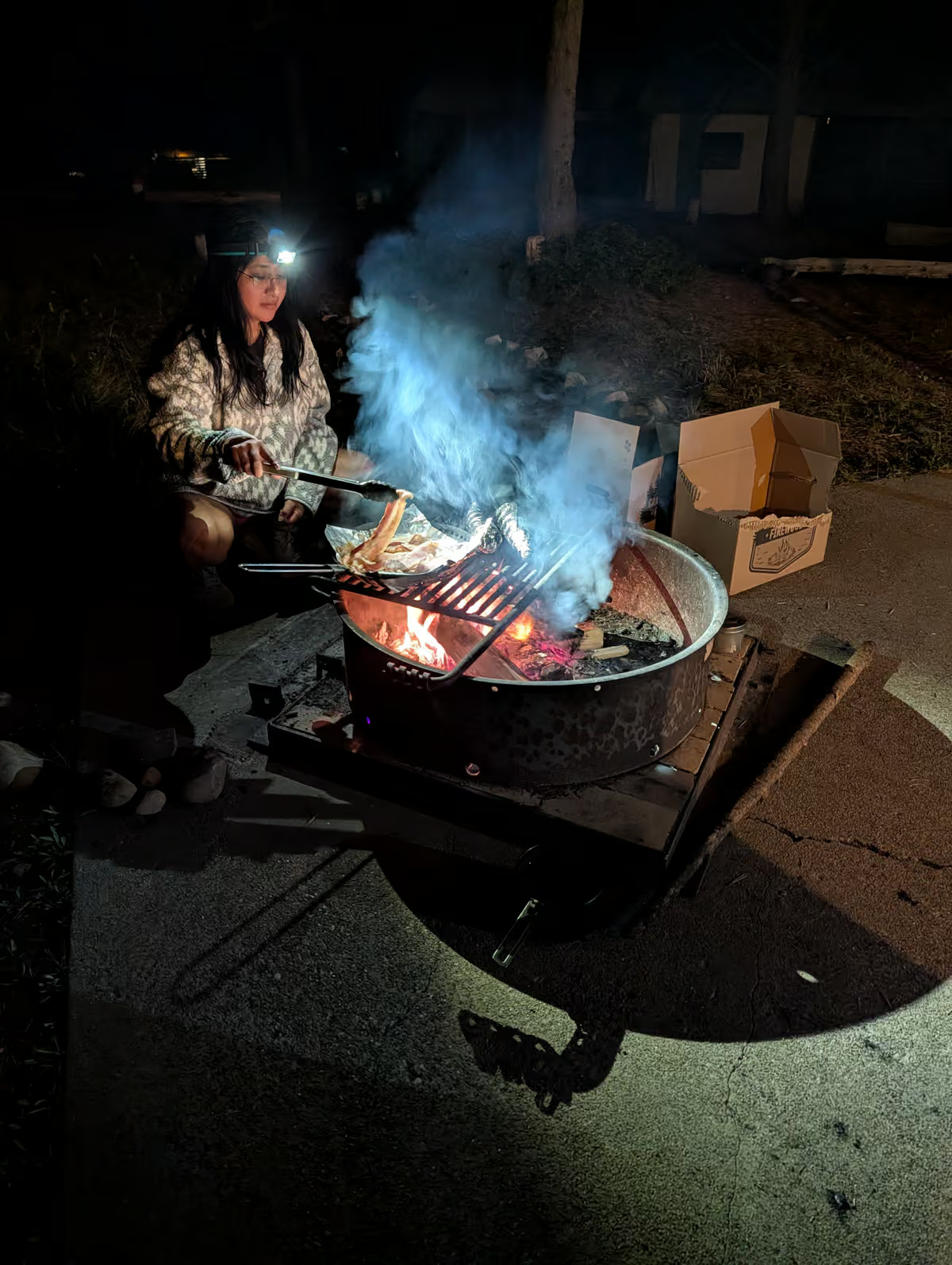
We made coffee and cinnamon tea over the fire each morning, and this was one of my favorite, yet simple parts of the trip. I loved brewing my coffee and sitting in the campsite, enjoying the peace and quiet as I slowly woke up.
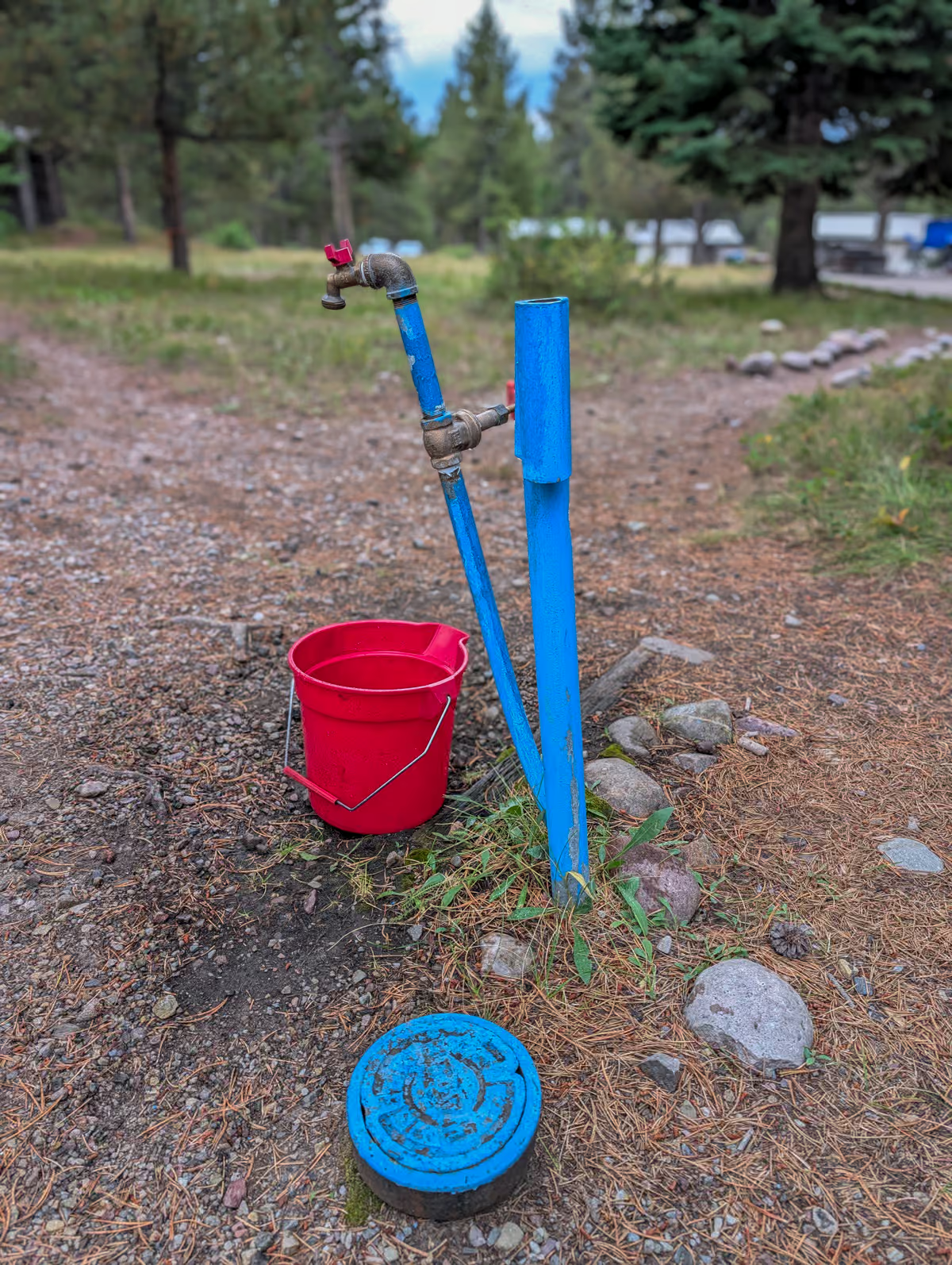
Between campsites is a water spigot and a bucket to extinguish the outdoor fires once you’re done using it. Don’t use this in the indoor stove, it can crack it. All water on site is potable, too, including this water.
We washed our dishes at the sink near the bathrooms, where there was also a small table to set everything on. We’d bring our dirty dishes over along with our sponge and dish soap and clean everything there after meals. We didn’t want to leave any dirty dishes around that might attract bears or other wildlife.
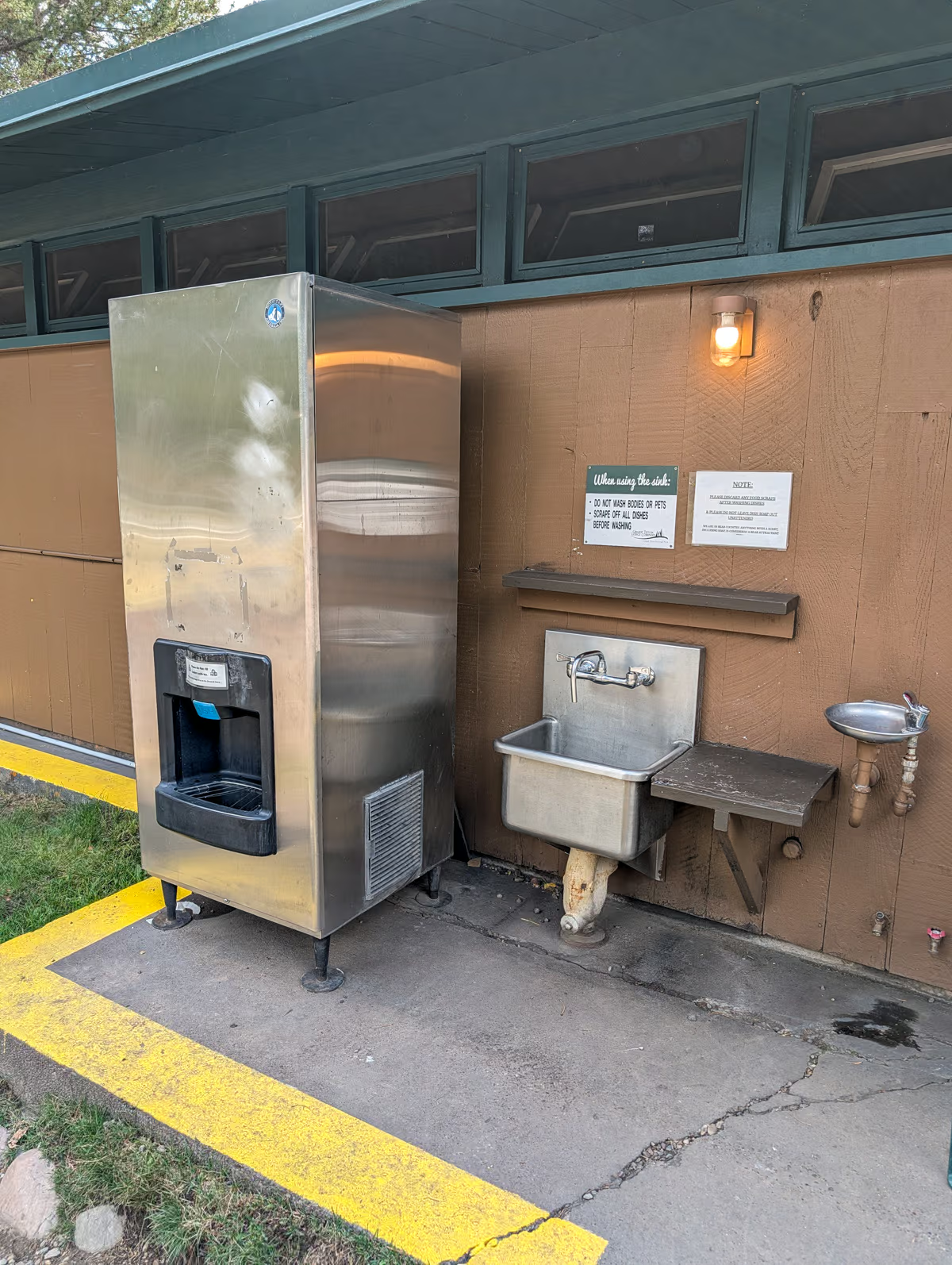
They also have an ice dispenser to the back of the Tent Village building. They ask that you don’t use it to fill up large coolers, but the groundskeepers told us that small coolers like ours were acceptable.
Bear-Resistant Food Storage
Each campsite has a large, brown metal food-storage locker bolted to the concrete. Anything with an odor, including food, cleaning supplies, dog treats and other pet supplies, should be stored inside.
The locker was incredibly spacious and easily fit our cooler, cooking equipment, pet supplies, two gallons of water and anything else without any issues. We even chose to keep scented items in the locker rather than in our car to reduce the chance of attracting wildlife to our vehicle.
It’s very important to have a secure place to store these things when camping somewhere bears and other wildlife may be present. We heard that a bear had walked through the campground during our stay, and the groundskeepers confirmed they had seen one. Even if you haven’t personally seen a bear, it’s important to follow the campground’s food-storage rules and keep anything that might attract wildlife secured.
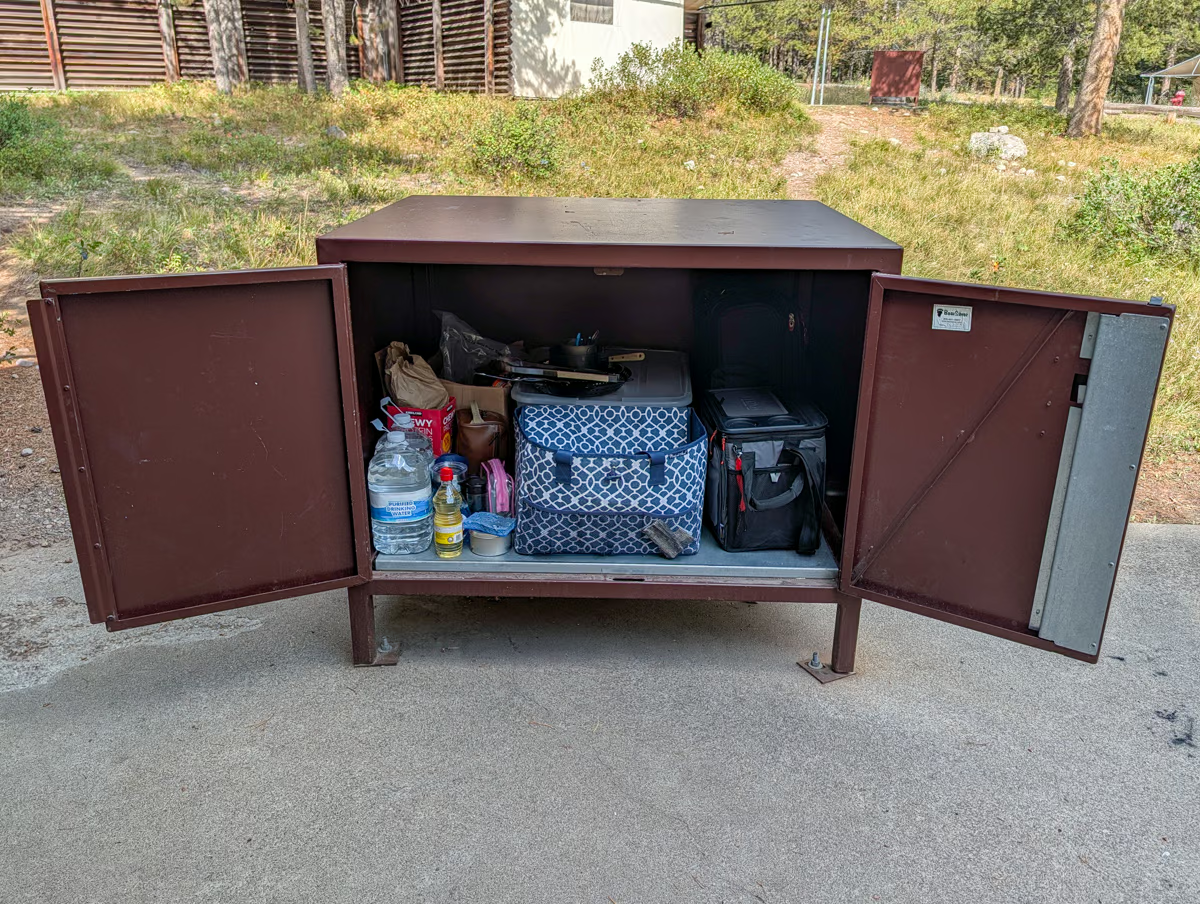
We also made sure to put things away instead of leaving food or dog treats sitting around our campsite. I don’t think our two dogs smell (though I’m probably biased since I’m around them all the time!), but their food and supplies can still attract curious wildlife. Having a dedicated locker for everything was helpful and also gave us some added peace of mind.
Staying Warm in Colter Bay Tent Cabins
If there was one mistake we made while camping at Colter Bay, it was underestimating how cold it would get at night. Temperatures during the day were in the upper 80s or low 90s, but by nighttime, they dropped into the mid- to low 40s (around 7°C).
On our first night, we went to bed with the few blankets we brought from home, thinking they’d be enough. We woke up freezing, and Minerva rushed to get a fire going in the indoor stove to warm us up. Even the pups were shivering!
We had a little trial and error while starting the stove for the first time. We followed the printed instructions we received at check-in, but still smoked out the tent enough to set off the smoke detector. Over the next couple of nights, almost like a rite of passage, we’d hear smoke detectors going off around the campground as other campers learned how to heat their tents, too.
The Tent Village offered blanket rentals, even after hours if you called the number they provided at check-in. Someone would meet you at the store so you could pick up a blanket if you needed one during the night. We would much rather buy than rent, though, so the next day Minerva stopped at TJ Maxx in Jackson Hole and bought two more blankets to help keep us warm.
Between using the outdoor fire pit for cooking and the indoor stove for heat, we burned through a surprising amount of firewood during our five nights. I think we went through at least 12 bundles. The bundles sold at the campground had around six pieces of wood and cost $12 each during our stay. Each bundle only contained pine, so it burned quickly and we flew through them much faster than we thought we would.
If you are planning to stay in Colter Bay in late summer, bring more layers and blankets than you think you’ll need. I’d also budget for more firewood than you think you’ll use, especially if you plan to cook over the fire and heat your tent each night like we did. We found much cheaper bundles at Smith’s in Jackson Hole for around $5 each.
What It’s Like Camping at Colter Bay With Dogs
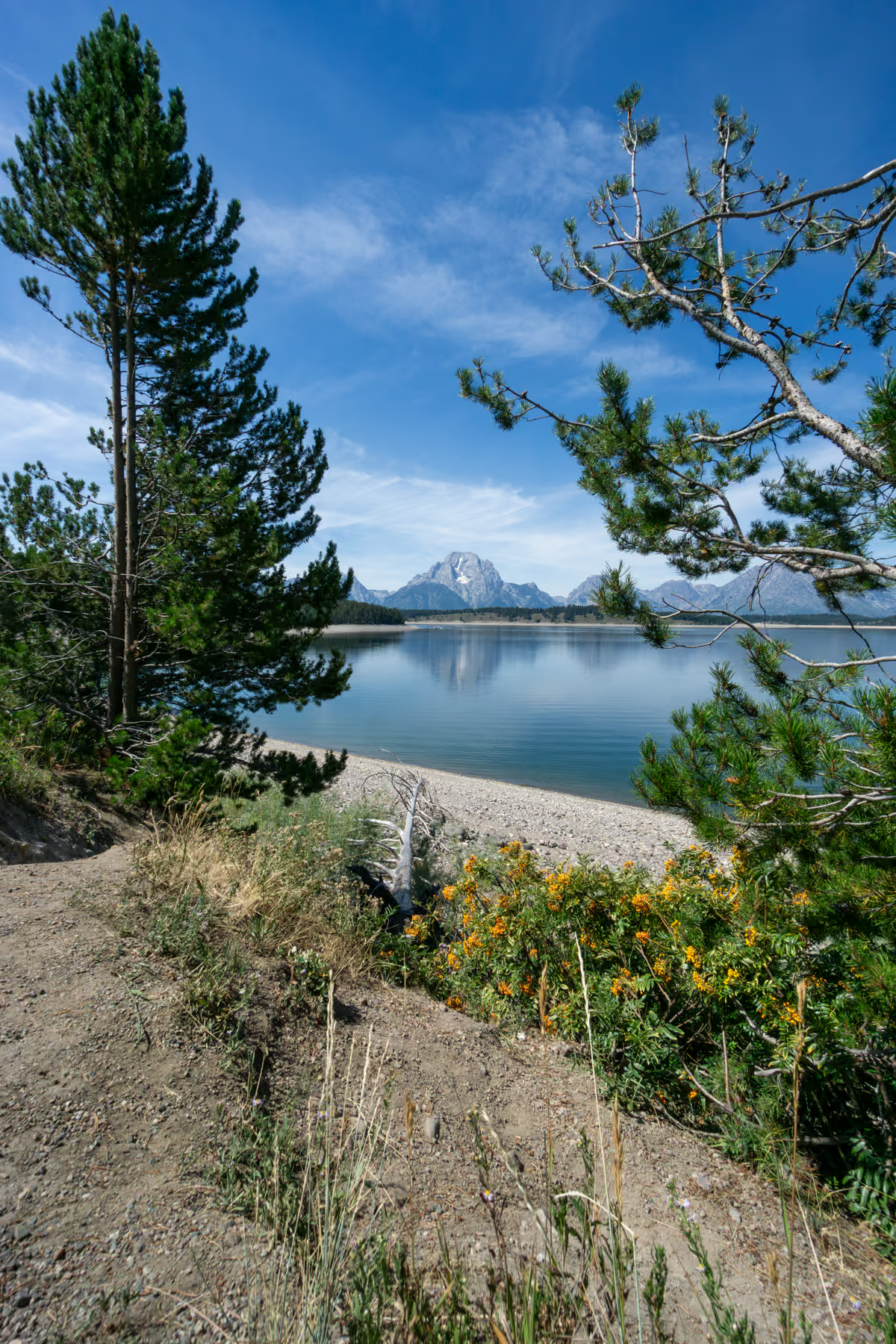
We knew before starting our road trip that Grand Teton National Park wasn’t particularly dog-friendly. Dogs are allowed in parking lots, scenic overlooks, on roads and road shoulders, and in some other developed areas, but they aren’t allowed on hiking trails. We also wanted to take Toby and Lily out on Jackson Lake, but the water level was very low during our visit, and boat rentals weren’t available.
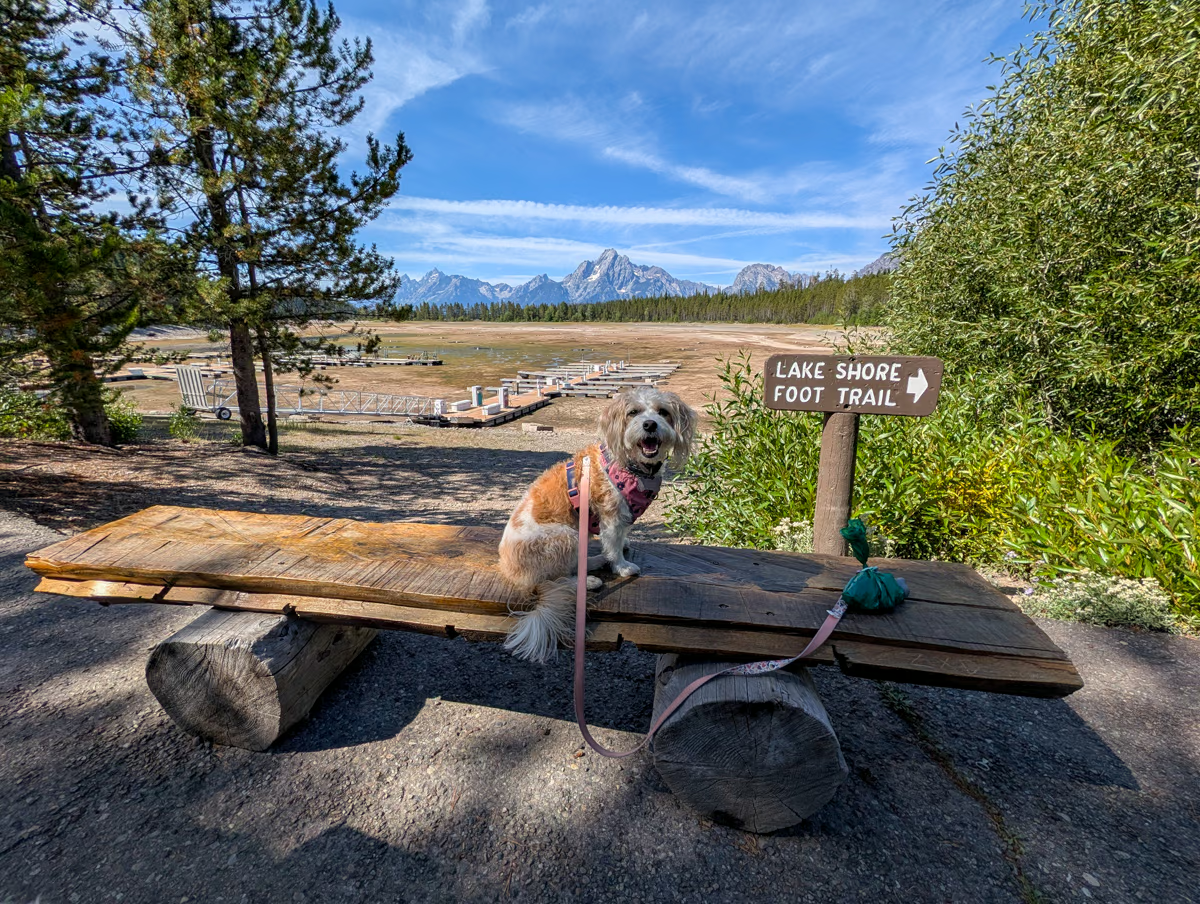
Even though we wouldn’t be able to take the pups to many places, we wanted them to enjoy the trip as much as we did. Staying at Colter Bay gave us a place right inside the park where we could spend time outdoors together while planning our dog-friendly adventures.
When we wanted to visit somewhere the dogs couldn’t go, we’d take turns exploring while the other stayed back in the car with them.
Our pups had camped with us before, including a trip to an RV in Pittman Center, Tennessee, where we explored Great Smoky Mountains National Park, and a separate stay at Mossquatch Resort on the Olympic Peninsula, where we glamped. But staying in the tent cabins at Colter Bay was their most outdoorsy camping experience yet.
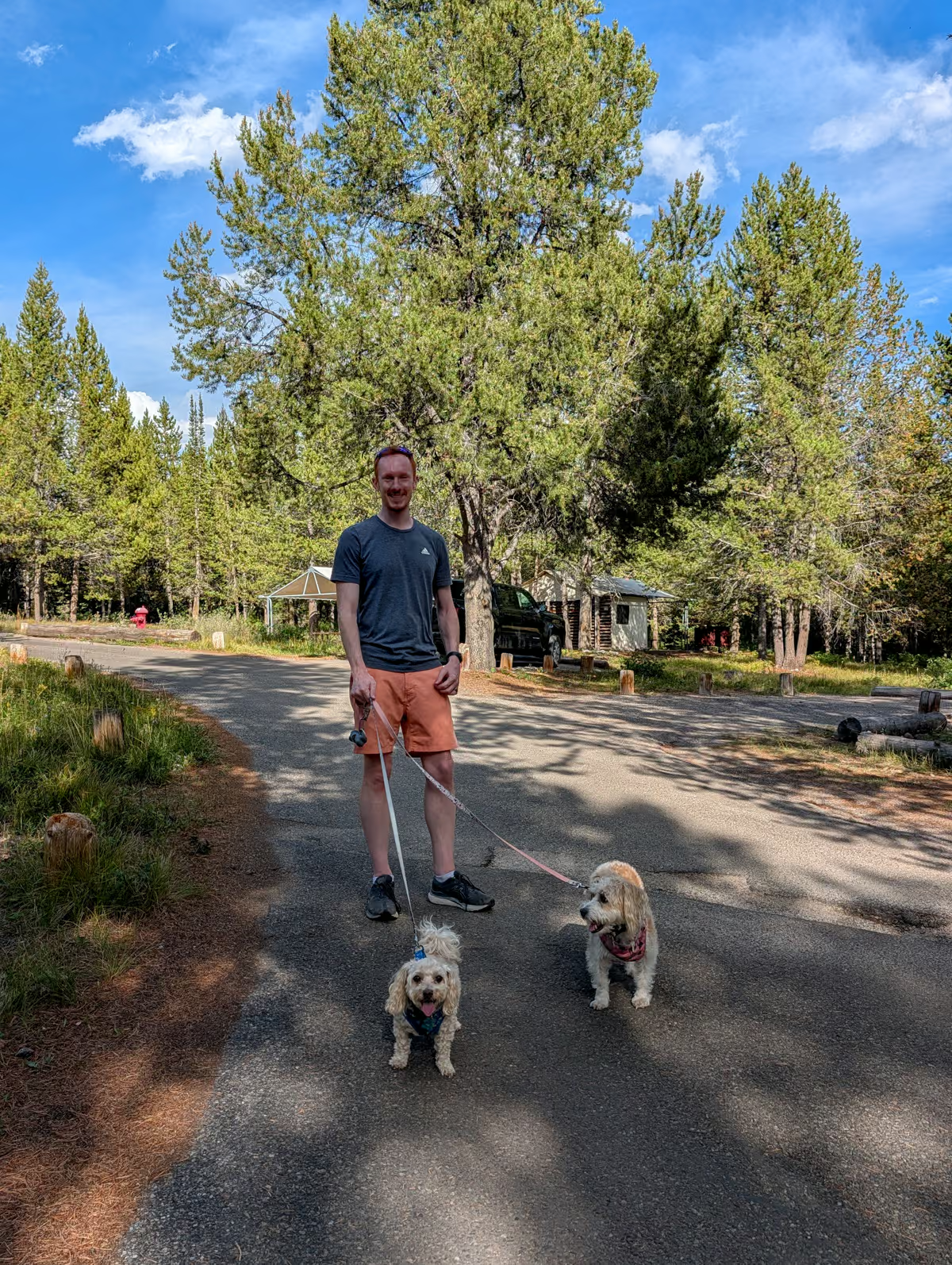
When we first got to the tent, they absolutely loved it! They explored the campsite and enjoyed walking around the campground with us. They had to stay on leashes no longer than six feet whenever they were outside the tent, so we kept them leashed whenever they came out with us.
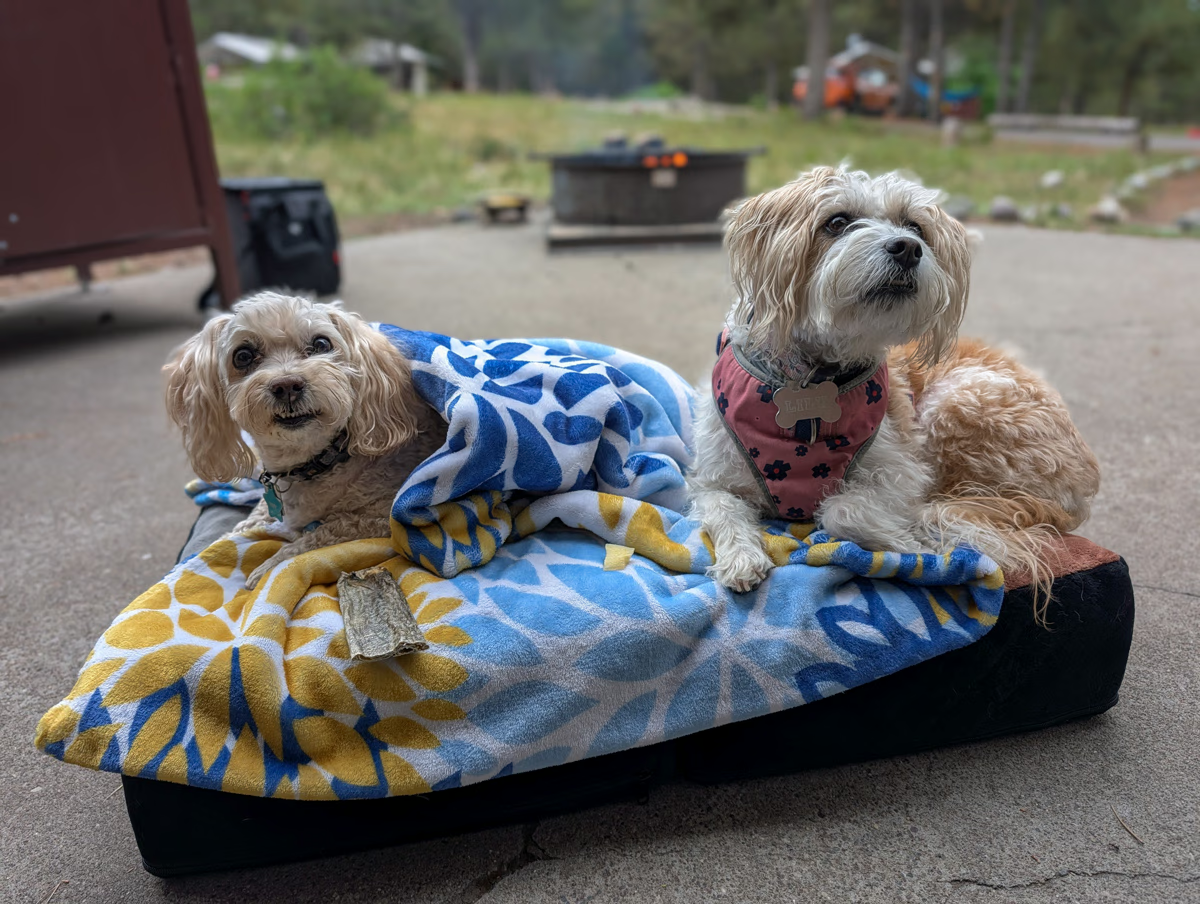
After a day or two, though, Toby started getting a little tired of it all. I guess there really is such a thing as a little too much outside, even for a dog who gets super excited whenever it’s time to go out. Instead of spending time outside with us, he would go back into the tent and lay on the bed. When he was outside, he preferred we put down either his blanket or carseat padding. He’s a special little thing!
Overall, though, the tent was a fantastic dog-friendly place to stay while we all explored Grand Teton. We even took a day trip about an hour north into Yellowstone National Park.
We couldn’t leave the dogs unattended in the tent, so we planned our adventures around places they could visit with us and, when they couldn’t go with us, we took turns where one of us explored while the other stayed back in the car with them.
Wildlife Around the Campground
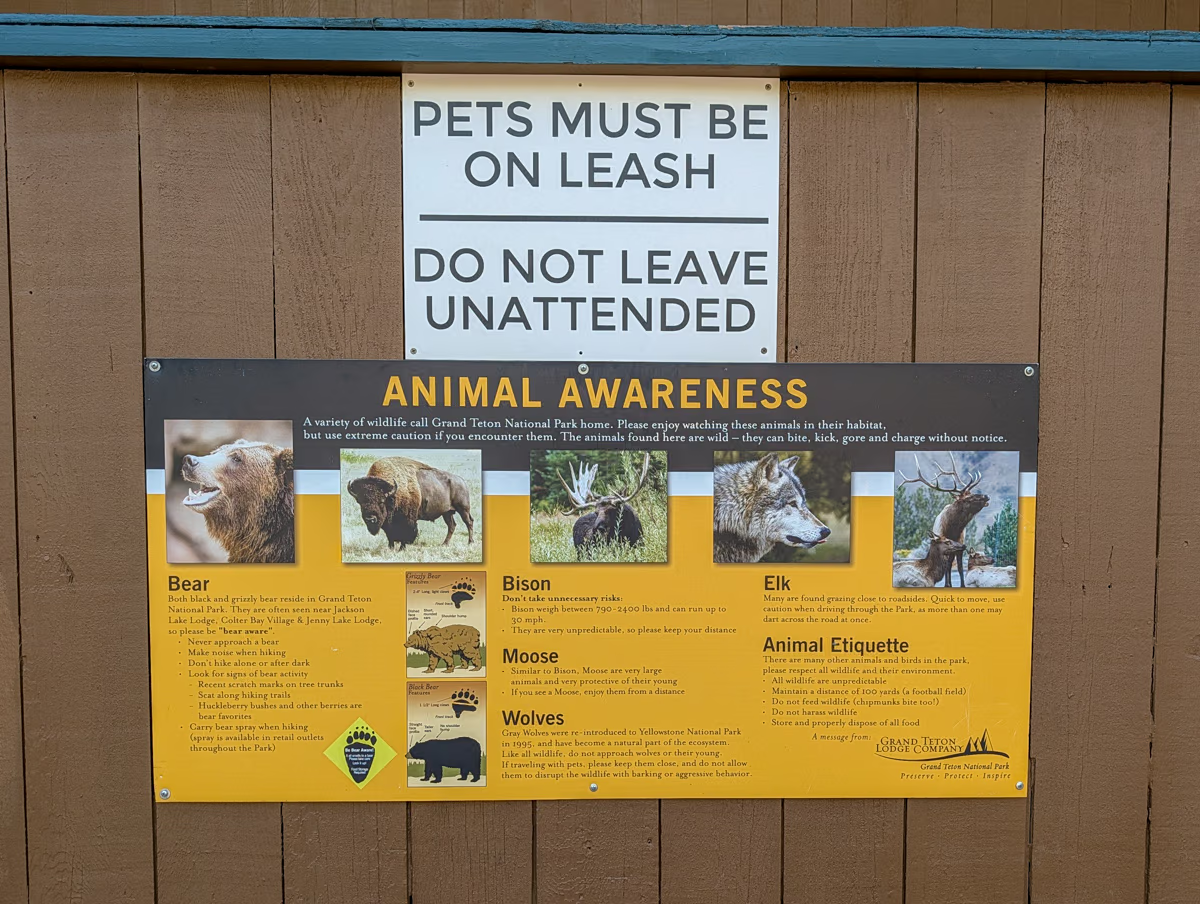
Many people come to Grand Teton to see wildlife like moose, bison, elk and bears. Camping directly in the woods, we had deer walk through the campground and close to our campsite and, in the evenings and early mornings, we could hear elk calling to one another in the distance.
We also had a chipmunk who seemed determined to make its way into our tent and repeatedly tried to harass Lily.
The same morning we saw the deer, we heard from other campers that a bear had passed through the campground. The groundskeepers confirmed they’d seen it, too, although we never saw it ourselves while staying at Colter Bay.
Bathrooms, Showers and Other Campground Facilities
You aren’t fully out in the woods when camping in the tent cabins. They have shared facilities like bathrooms, showers, laundry and the General Store on-site.
Bathrooms and Showers
There are two bathroom buildings with sinks, toilets and places to wash dishes within a short walk of the tents. One is in the Tent Village building where you check in, and the other is on the north side of the campground, which was the one closest to our tent. Neither has showers, though. Those are located in Colter Bay Village, near the Launderette and General Store.
We usually drove over to the showers instead of walking, and since the dogs couldn’t be left alone at the tent, we took turns showering while the other waited in the car with Toby and Lily. Showers cost $5 per use during our visit (kind of an ouch), and you need to bring your own towels, toiletries and other shower supplies (but you can also buy some there).
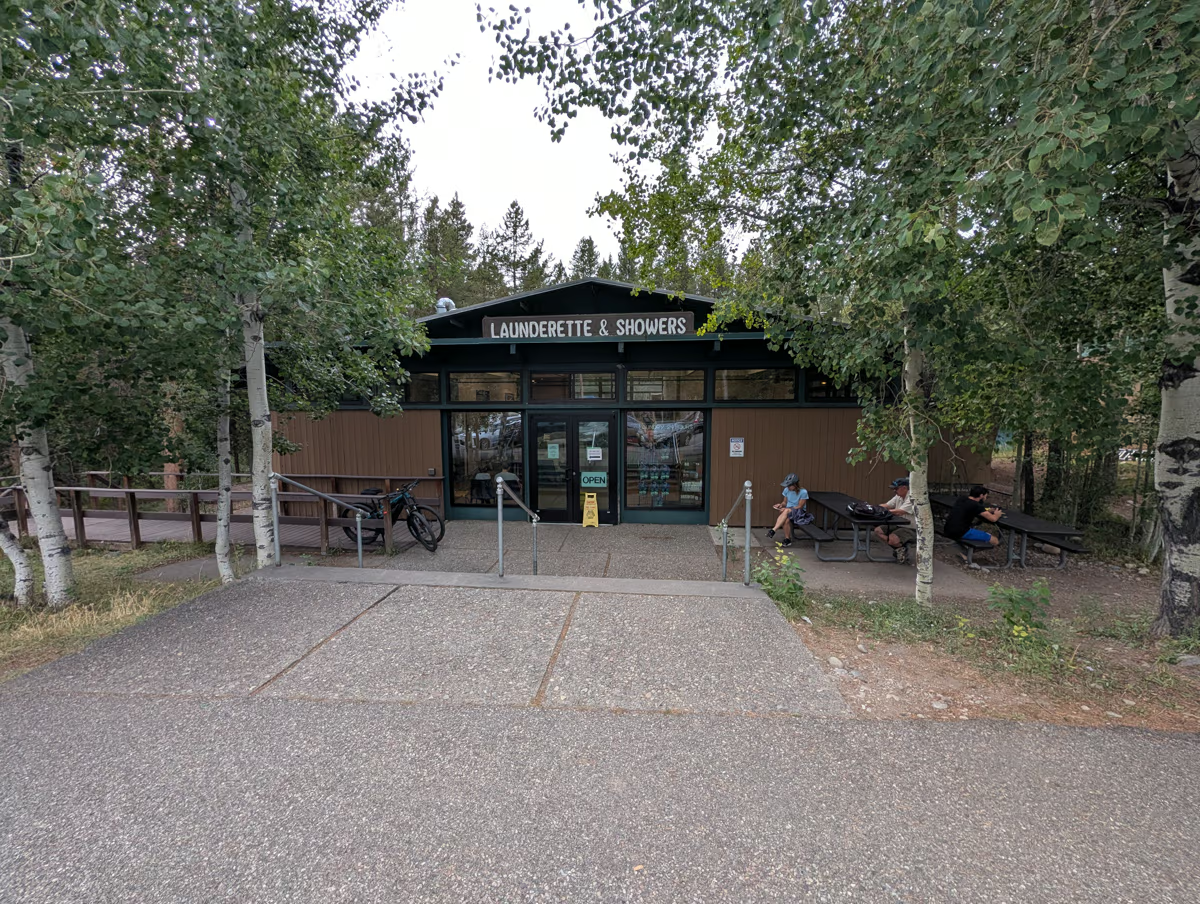
I forgot to pack shower shoes, which turned out to be a somewhat expensive mistake. I didn’t want to shower without a pair, so I bought some Grand Teton National Park-themed flip-flops from the store for $15. They were poor quality, and my feet slipped out of them when they got wet (not like that would ever happen in a shower!). The toe strap also broke while I was walking down a set of stairs the day after I bought them.
We only showered twice each during our five-night stay, partly because of the $5 cost and partly because the showers were only open from 7am to 9pm (we tend to stay out late). The rest of the time, we either went without a shower or used rags dipped in hot water we’d heated over the fire.
Laundry, the General Store and Gas Station
We used the laundry facilities once during our stay. We washed some clothes, along with a blanket we’d used earlier in the trip to protect our car from hail while visiting Helen Hunt Falls in Colorado Springs. Having the laundry facilities in the same building as the showers was convenient. It cost $4.50 to use the washer and $3 to run the dryer.
The General Store was useful for picking up supplemental groceries, ice cream and souvenirs. Though, we preferred buying most of our food from Jackson before getting to the village because prices were higher than what we found outside the park.
There’s also a gas station near the entrance to Colter Bay Village, which could be convenient if you need to fill up before heading into the campground or when leaving. We didn’t use it, but it’s good to know it’s there.
Wi-Fi and Cell Service at Colter Bay
Our Verizon cell service was pretty spotty while in the park and campground. We could make phone calls and send text messages (SMS, MMS and Signal), but mobile data was extremely slow, and we could barely use the internet or upload photos and videos.
We take a lot of photos and videos during our trips (around 1,500 on this road trip alone), and we like to back them up quickly in case something happens to our phones or cameras. Since we couldn’t keep up with our backups, our phone storage filled up quickly. Later in the trip, I was only able to record part of Old Faithful’s eruption before my phone ran out of storage.
There is free public Wi-Fi near the general store, showers and laundry facilities, but we found the connection inconsistent. Sometimes we could upload photos and videos very quickly, while other times we’d connect to the Wi-Fi but not have an internet connection.
Exploring Grand Teton National Park From Colter Bay
One of the main advantages of staying at Colter Bay is being directly inside Grand Teton National Park without needing to travel an hour north from Jackson.
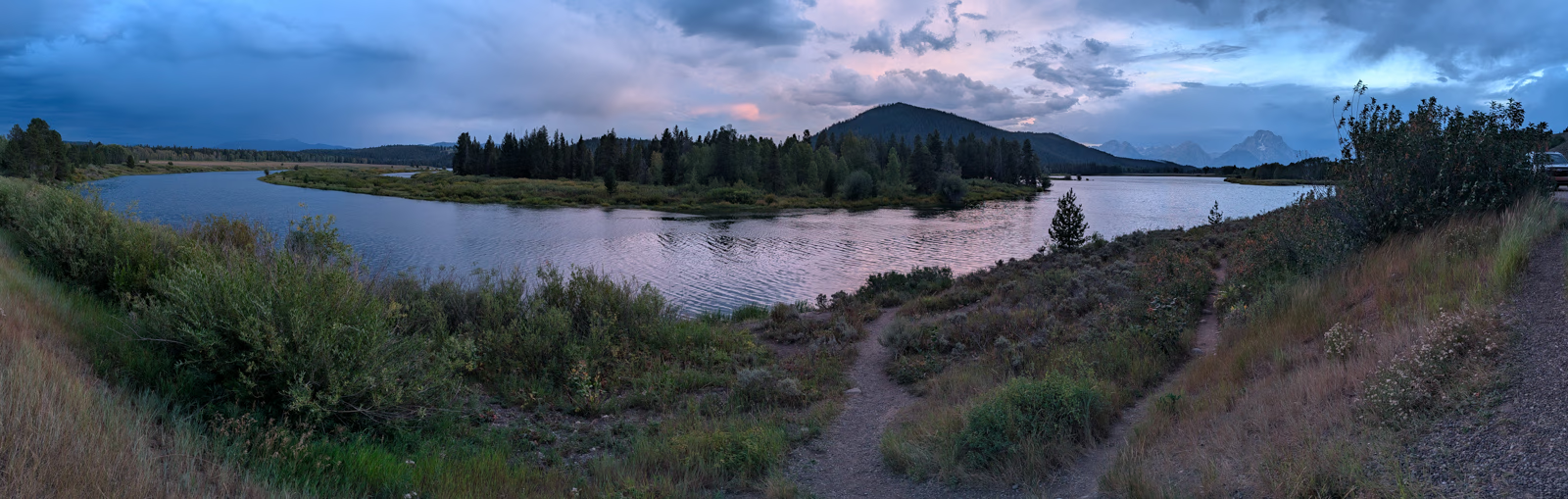
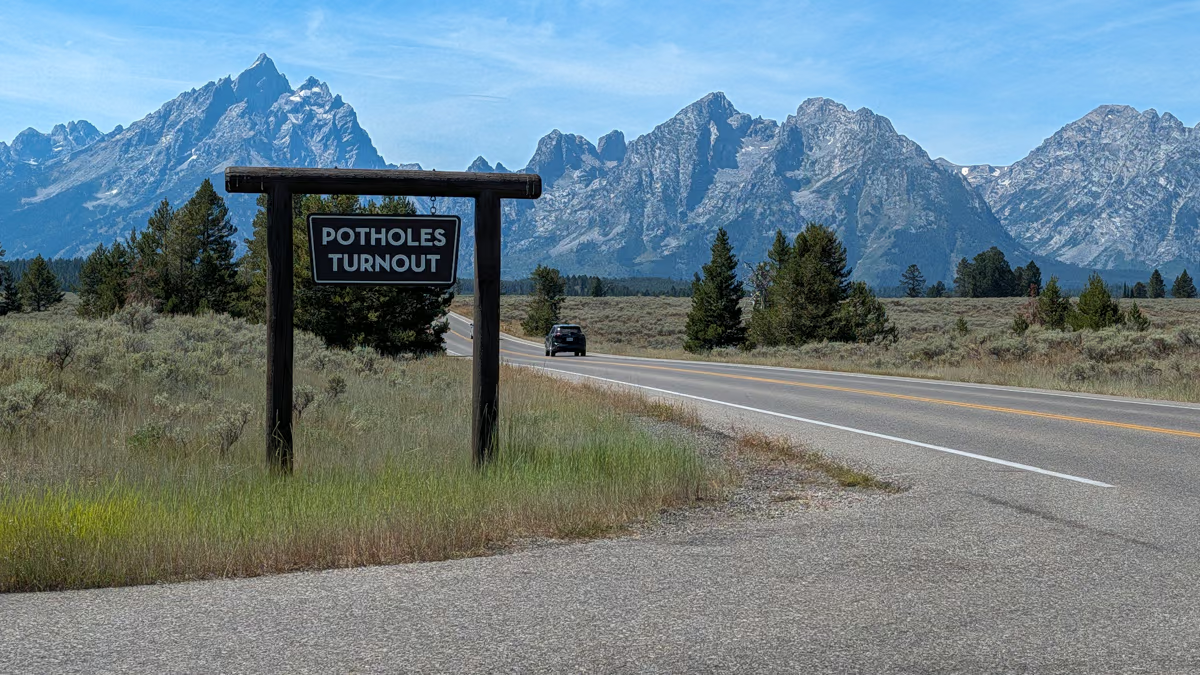
A lot of our sightseeing was done while driving along the park roads and stopping at viewpoints, historic sites and places that looked pretty. We knew ahead of time that this trip wouldn’t have us going on long hikes since one of us always had to stay with the pups. You can actually see a lot directly from your car and the parking lots.
We drove north from Jackson a couple times during our trip. Each time, the drive kept us primarily along US-191. I thought this part of the drive would be more mountainous, twisty and fun to drive along. The Teton Range was visible to the west, but the main park roads were relatively flat and straight. I originally thought we’d be driving much closer to the mountains, so that was a little different from what I’d expected.
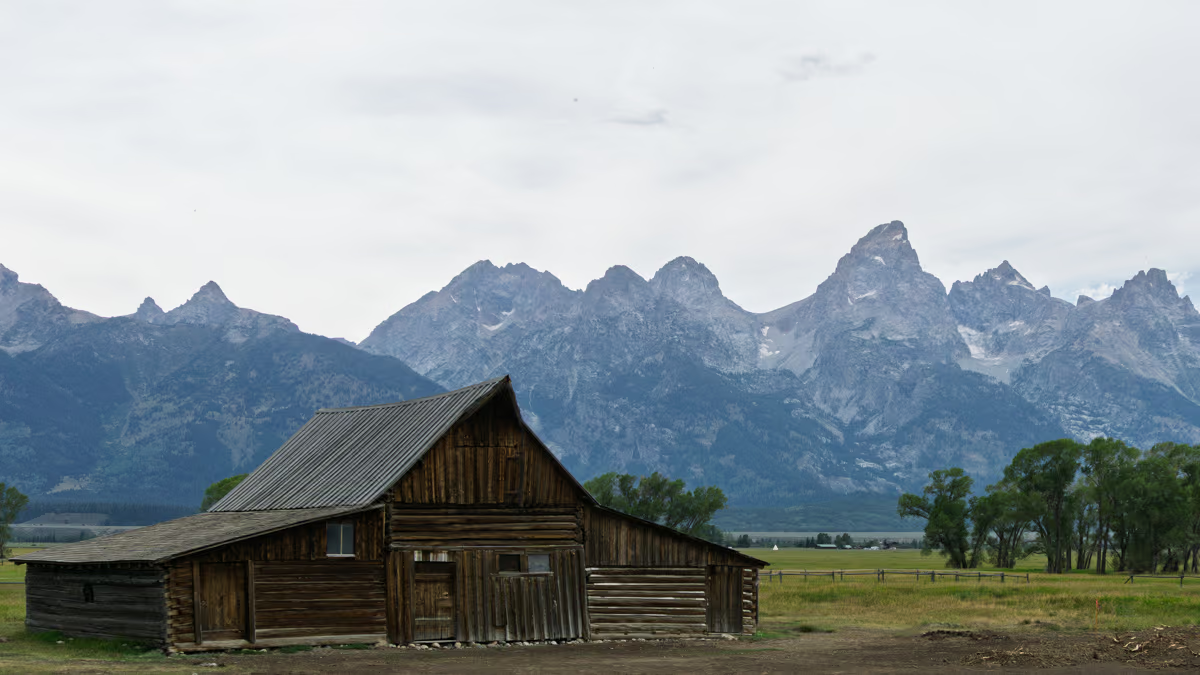
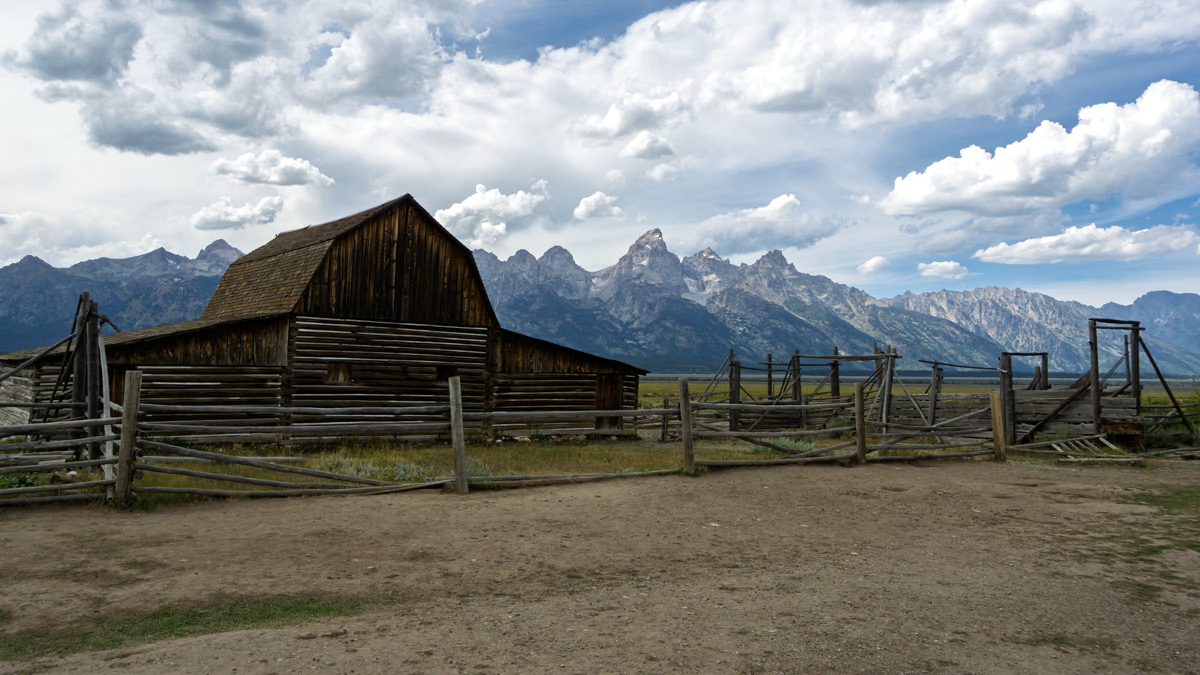
We stopped at some of the highlights, like Mormon Row, where you can see the historic homesteads and barns that you’ve probably seen in many photos of Grand Teton. Minerva and I have also always wanted to see moose ever since our first road trip to Glacier National Park together in 2021. We watched for groups of cars pulled over along the road, since that usually meant someone saw an animal nearby.
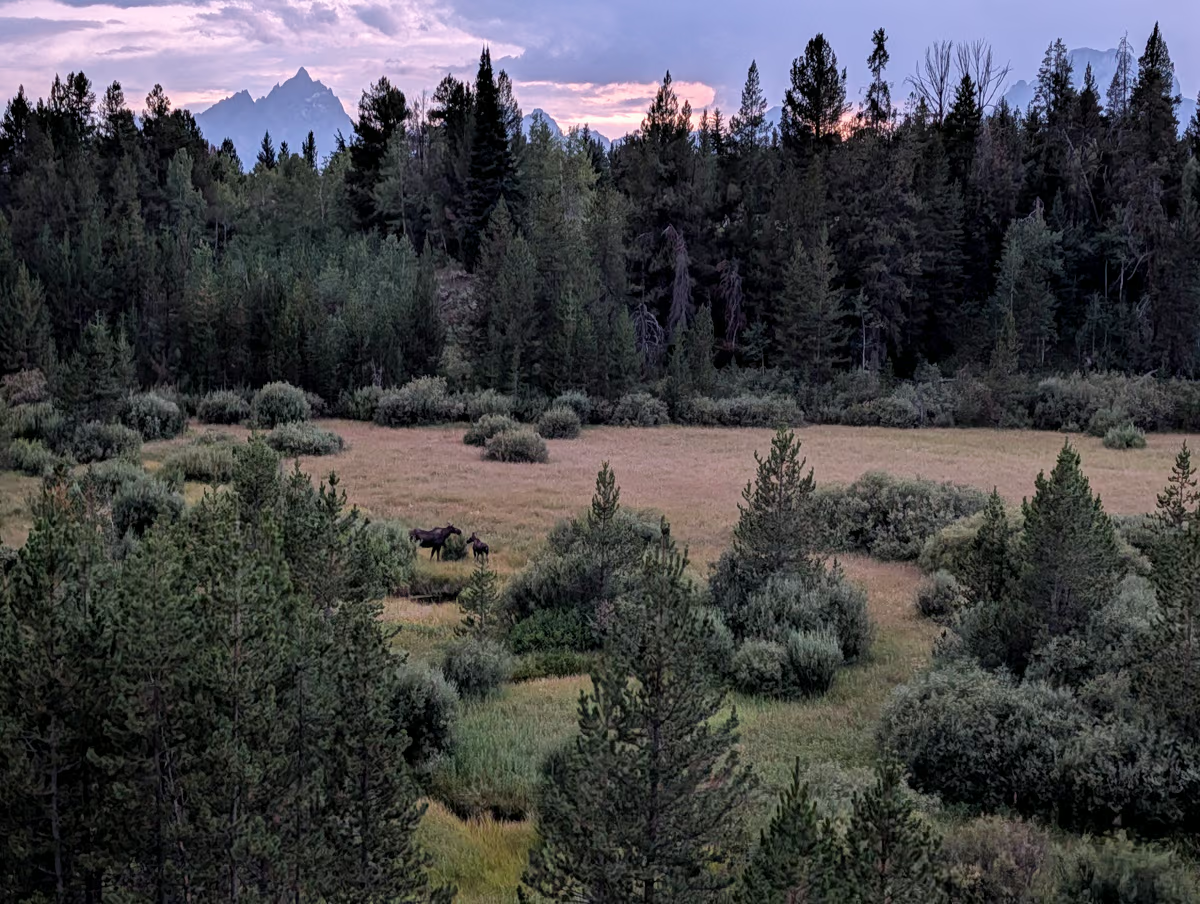
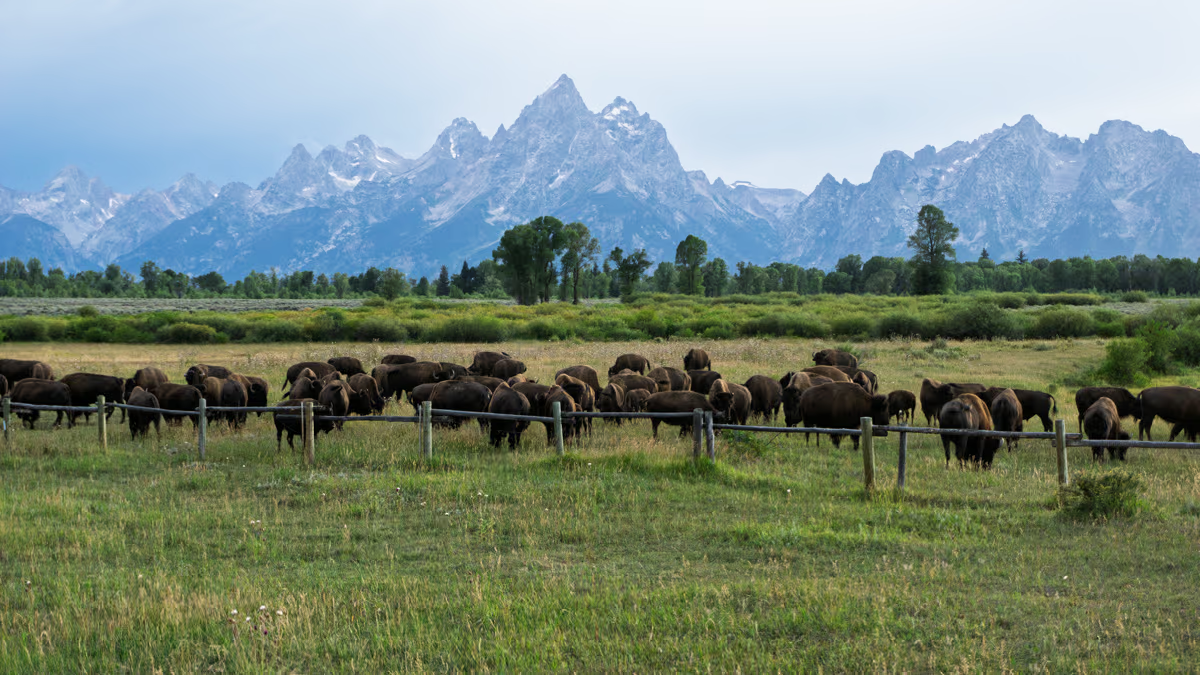
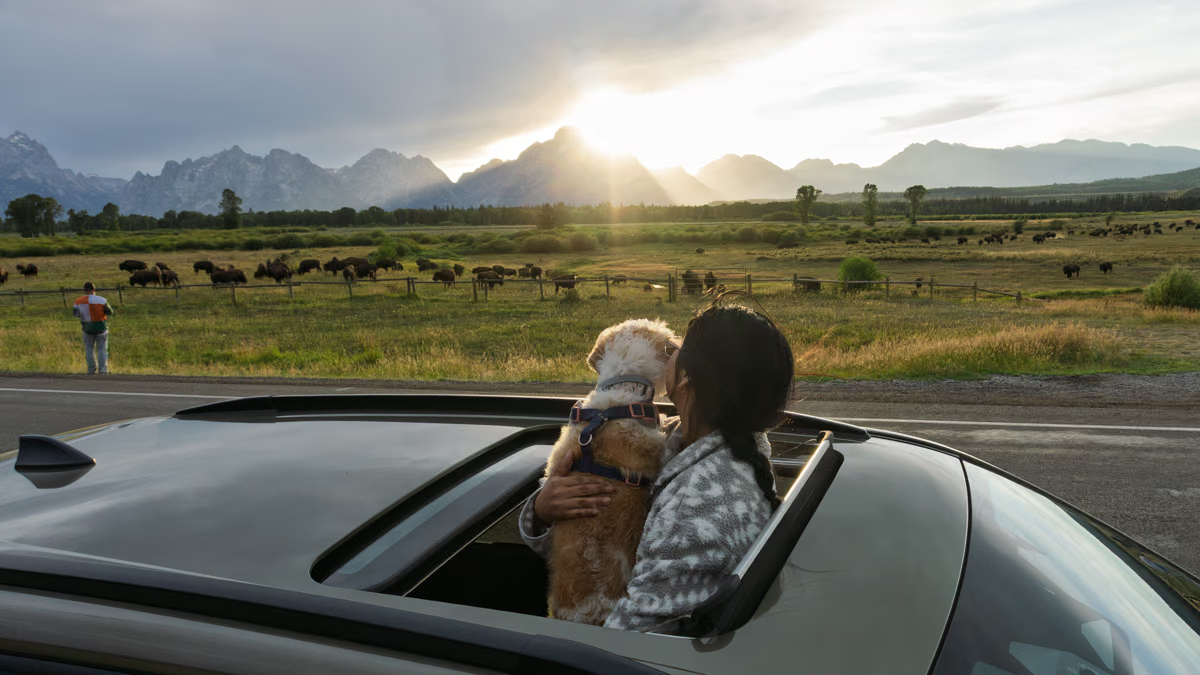
We saw a couple of moose during our stay, including a mother with her young one, as well as a herd of bison.
Because we were traveling with Toby and Lily, we weren’t planning any mountain hikes or exploring any of the alpine lakes. We couldn’t leave the pups alone in the tent, and we wouldn’t have wanted to anyway. Instead, we saw as much of the park as we could while stopping at places that the dogs could join us or Minerva and I would take turns exploring when they couldn’t.
We Saw a Bear as We Left
Of all the wildlife we saw during our visit, one animal we hadn’t spotted was a bear (ideally from a safe distance!). On the morning our reservations ended, we got up early to start the drive south toward Rocky Mountain National Park. We’d pretty much given up on the idea of seeing a bear during our stay.
As we headed south on US-191 in the pitch-black early morning, our headlights caught a smaller dark figure bounding across the road ahead of us. It was a young black bear!
Minerva reacted quickly, and we slowed down enough to let the little bear finish crossing the road and disappear into the woods. It was such a cool and unexpected way to leave Grand Teton National Park. It was also a good reminder that wildlife can jump out onto the road at any time.
Would We Stay in Colter Bay Tent Cabins Again?
We spent five nights at the Colter Bay tent cabins while exploring Grand Teton and taking a day trip into Yellowstone. I think the pups were ready to get back to somewhere with four solid walls, but Minerva and I would have loved to stay longer.
We spent far more money on firewood than we expected, learned how to heat the tent so we wouldn’t freeze at night and figured out how to explore both Grand Teton and Yellowstone in a dog-friendly way. The next time we camp in the Tetons, probably years from now, we’ll bring more blankets, pack shower shoes and pick up cheaper firewood in Jackson before arriving at Colter Bay Village.
For us, the Colter Bay tent cabins were a great middle ground between traditional tent camping and staying in a cabin. They also gave Minerva more confidence to try more traditional camping in the future.
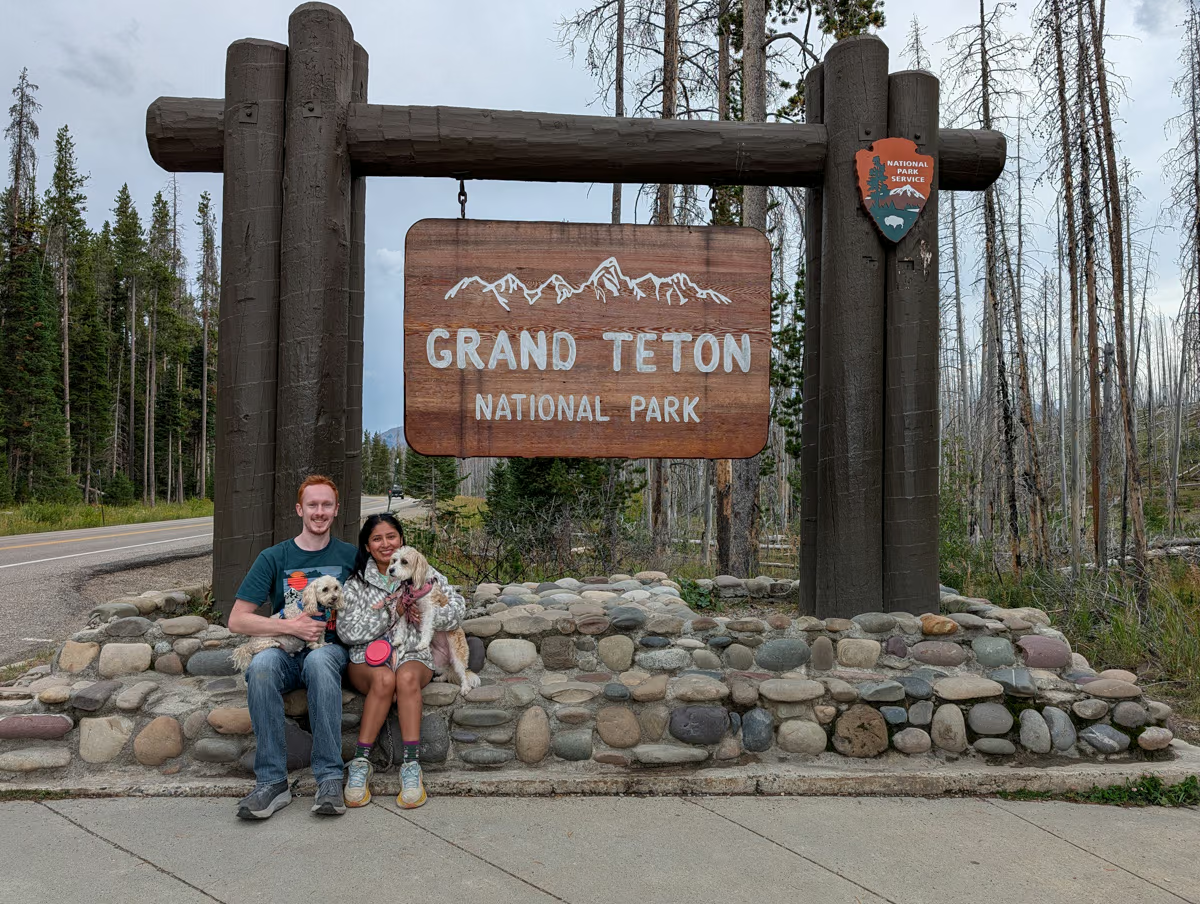
Even months after our trip, we still talk about how much we loved (and miss) those five nights. We loved waking up to the cold, building a fire to warm the tent, cooking our meals outside, listening to elk calling in the distance and watching deer walk through the campground.
Of everything we did while exploring Grand Teton, staying at Colter Bay was by far our favorite part.
If you’re thinking about camping in Grand Teton National Park and want something between a traditional campsite and a cabin, I’d put the Colter Bay tent cabins on your list. Just be ready for some potentially cold nights, plan ahead for food and firewood and know what you can and can’t do with dogs in the park.
From here, we continued the drive south to explore Rocky Mountain National Park in Colorado.
Leave a Reply